

Nothing about your eating changed. The same portions, the same foods, the same general approach that maintained your weight and energy for years. And yet something has shifted — in how your body responds, in where weight accumulates, in how energy fluctuates across the day, in how much more effort the whole thing seems to require. If you’ve found yourself eating the same way you always have and getting different results, you’re not imagining it. The mechanism has changed underneath you.
Understanding what actually changed — the specific hormonal and metabolic shifts that alter how the body processes food after 40 — is the foundation for making adjustments that actually work. Not adjustments based on eating less and exercising more, which addresses a caloric model that doesn’t capture what’s happening. Adjustments based on the specific metabolic environment that perimenopause and menopause create.
This article covers the three core metabolic changes that affect eating after 40, what each one means practically, and what the most evidence-supported dietary adjustments actually look like for women in this transition.
The Three Metabolic Changes That Explain Everything
Change 1 — Declining Insulin Sensitivity
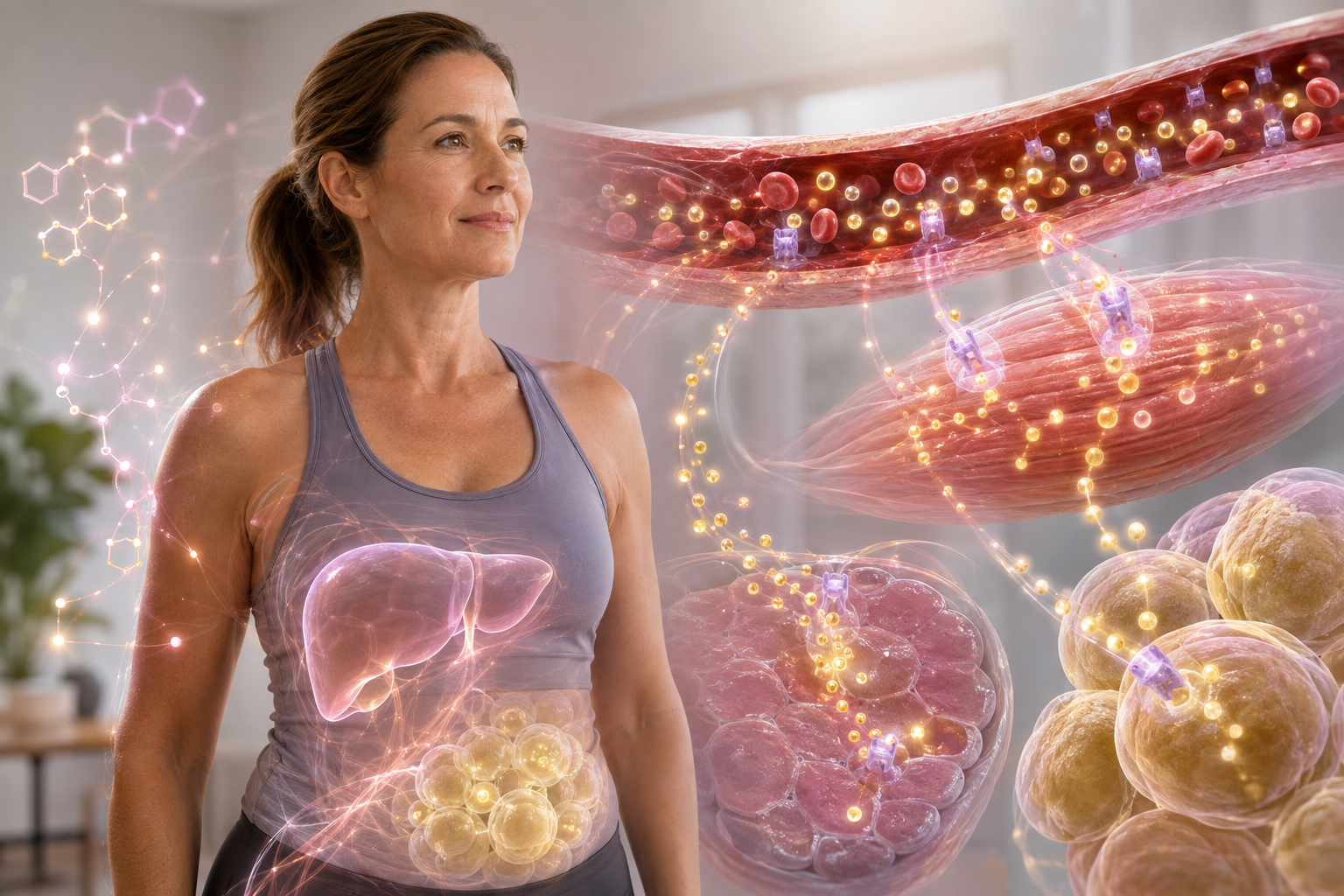
Insulin is the hormone that moves glucose from the bloodstream into cells for energy use or storage. Insulin sensitivity — how efficiently and readily cells respond to insulin’s signal — is directly supported by estrogen. Estrogen enhances insulin signaling in muscle cells, liver cells, and fat cells, promoting efficient glucose clearance and metabolic flexibility.
As estrogen fluctuates and declines during perimenopause, this insulin-sensitizing effect diminishes. Cells become less responsive to insulin’s signal — a state called insulin resistance. The pancreas compensates by secreting more insulin to achieve the same glucose clearance. The result is higher blood sugar peaks after the same meals that previously produced moderate responses, more pronounced energy drops as blood sugar falls more sharply, and — critically — a metabolic environment that promotes fat storage, particularly in the abdominal region.
This change occurs independent of dietary behavior. A woman eating exactly as she has for years is now in a different metabolic environment. Research published in Diabetes Care found that insulin resistance increases significantly around the menopause transition, independent of changes in body composition or physical activity. The hormonal change is the primary driver, not behavioral change.
Change 2 — Shifting Muscle-to-Fat Ratio
Estrogen supports muscle maintenance. It promotes muscle protein synthesis, helps preserve muscle mass in response to activity, and influences the ratio of lean to fat tissue the body maintains. As estrogen declines, the body’s tendency to maintain muscle versus accumulate fat shifts — even at the same activity level and caloric intake.
This metabolic shift means that without specific countermeasures — primarily resistance training and adequate protein intake — the body tends to replace metabolically active muscle with metabolically less active fat. Muscle burns calories at rest. Fat does not. A woman who has lost five pounds of muscle and gained five pounds of fat over several years weighs the same but has a meaningfully lower resting metabolic rate.
Sarcopenia — age-related muscle loss — occurs at a rate of 3-8% per decade after 30, with the rate accelerating around menopause. The practical consequence is that the same intake that maintained weight in the thirties creates a modest caloric surplus in the forties and fifties that accumulates as fat over time.
Change 3 — Fat Distribution Shift
Where the body stores fat changes during the menopause transition. Premenopausal women tend to store fat preferentially in the hips, thighs, and buttocks — subcutaneous fat that has relatively benign metabolic effects. As estrogen declines, the body shifts toward accumulating visceral fat — the deeper abdominal fat that surrounds the internal organs.
This isn’t a matter of willpower or eating behavior. It’s a direct consequence of estrogen’s influence on fat distribution. Visceral fat is metabolically active in concerning ways: it produces inflammatory compounds, worsens insulin resistance, contributes to cardiovascular risk, and influences cortisol levels. A 2019 study published in Obesity found that the menopause transition was independently associated with increased visceral fat accumulation, controlling for age and total body weight. The transition itself — not aging in general — drives this specific fat distribution change.
What Actually Works: The Evidence-Supported Adjustments

Protein at Every Meal — The Highest-Leverage Change
Increasing protein intake is the single most consistently supported nutritional intervention for women in this transition. Protein stimulates muscle protein synthesis, which counteracts the sarcopenia tendency that accompanies estrogen decline. It supports satiety more effectively than carbohydrates or fat, through mechanisms that include GLP-1, PYY, and other satiety hormones. It has a minimal effect on blood sugar compared to carbohydrates, and when eaten alongside carbohydrates it blunts the post-meal blood sugar response. And it has a higher thermic effect than other macronutrients — the body burns more calories digesting protein than digesting carbohydrates or fat.
Current evidence supports 25-30 grams of protein per meal for women in this transition — considerably more than most women currently eat, particularly at breakfast. A protein-forward breakfast — eggs, Greek yogurt, cottage cheese, smoked salmon — blunts the morning blood sugar pattern that drives mid-morning energy crashes and cravings. A palm-sized protein portion at lunch and dinner provides the ongoing amino acid availability that supports muscle maintenance throughout the day.
A 2020 randomized controlled trial published in the American Journal of Clinical Nutrition found that postmenopausal women consuming higher protein intakes maintained significantly more lean muscle mass than those consuming lower protein intakes, controlling for total caloric intake and exercise. The protein requirement increases during and after menopause, not decreases.
Blood Sugar Stability Over Calorie Counting
For women whose primary experience is the afternoon energy crash, the mid-morning cravings, or the feeling that hunger is suddenly more urgent and specific than it used to be — the most impactful single change is not eating less but eating differently to produce more stable blood sugar.
The protein-fiber-fat combination at every meal is the nutritional foundation of blood sugar stability. Protein slows gastric emptying. Soluble fiber — from oats, beans, apples, vegetables — slows glucose absorption. Fat further slows digestion. Together they blunt the post-meal blood sugar spike and eliminate the sharp drop that produces urgent cravings and energy crashes.
Eating order within a meal also matters more than most people realize. Research has found that eating vegetables and protein before carbohydrates within the same meal reduces post-meal blood sugar peaks by 30-40% compared to eating the carbohydrate first. This requires no change in what is eaten — only the sequence in which it’s consumed.
A ten-minute walk after meals has a well-documented effect on post-meal blood sugar, improving glucose clearance through muscle contraction mechanisms that are independent of insulin. This is one of the simplest and most accessible blood sugar interventions available and requires no equipment or preparation.
Caloric Adjustment Without Deprivation
The metabolic rate shift that accompanies muscle loss and age means that some modest caloric adjustment is appropriate — but the size of that adjustment is often overestimated. Research suggests the resting metabolic rate decreases by roughly 1-2% per decade, which translates to approximately 100-200 fewer calories per day in the forties compared to the thirties.
This modest difference is much better addressed through protein-forward eating that supports muscle maintenance and satiety, regular resistance training that preserves and builds metabolically active muscle, and blood sugar stability that reduces the overconsumption driven by cravings, than through deliberate restriction. Severe caloric restriction during perimenopause and menopause is counterproductive specifically because it accelerates muscle loss.
The Foods Worth Specifically Emphasizing
Beyond the macronutrient adjustments, specific foods have particular relevance during this transition.
Phytoestrogen-containing foods — soy, flaxseed, legumes — contain plant compounds that interact with estrogen receptors and have shown modest benefits for hot flash frequency in some research. These foods are nutritionally valuable in any case, and the potential additional benefit makes them worth including regularly.
Cruciferous vegetables — broccoli, cauliflower, Brussels sprouts, kale — support the liver’s ability to process and clear hormones, including the estrogen metabolites that circulate during hormonal fluctuation. Indole-3-carbinol, a compound found in cruciferous vegetables, supports healthy estrogen metabolism specifically.
Calcium-rich foods — dairy, fortified plant milks, leafy greens, sardines — support the bone density that begins to decline during the menopause transition. Calcium from food is better absorbed than calcium from supplements for most women, and distributing calcium intake across the day improves absorption.
Omega-3 fatty acids — from fatty fish, walnuts, and flaxseed — reduce the systemic inflammation that the estrogen decline allows to increase, support cardiovascular health in a period when cardiovascular risk is rising, and have shown modest benefits for mood and cognitive function during this transition.
What About Alcohol?
Alcohol warrants specific mention in the context of nutrition after 40 because its effects on the body during this transition are more significant than most women realize and interact with several of the metabolic changes described above.
Alcohol is processed by the liver as a priority fuel source — which means that when alcohol is present, fat burning is effectively paused. For women navigating the increased tendency toward visceral fat accumulation during menopause, this is specifically problematic. Alcohol also destabilizes blood sugar, worsens sleep quality in the second half of the night, increases cortisol levels, and can trigger hot flashes through its vasodilating effects.
This doesn’t mean alcohol must be eliminated entirely — but the evidence is clear enough that reducing alcohol consumption during this transition is one of the more impactful metabolic adjustments available, and one that doesn’t require calorie counting or complex dietary changes.
Common Questions About Eating After 40
Should I eat less as I get older?
The evidence suggests the answer is more nuanced than yes or no. The resting metabolic rate does decrease modestly with age, particularly with muscle loss. But addressing that through protein-forward eating, resistance training, and blood sugar stability is more effective and less harmful than deliberate restriction. Women who eat significantly less tend to eat less protein — which accelerates muscle loss and further reduces metabolic rate. The priority is eating differently, not eating less.
Is intermittent fasting helpful during menopause?
The evidence for intermittent fasting during menopause is mixed. Some women find that a compressed eating window improves their blood sugar pattern and reduces overall intake naturally. Others find that extended fasting periods worsen cortisol levels, increase cravings, and disrupt sleep — all of which are already challenges during this transition. The most important consideration is whether the approach allows adequate protein intake at each meal. A compressed eating window that consistently provides 25-30g of protein per meal is potentially useful. One that results in insufficient protein is counterproductive.
Why do I crave carbohydrates so intensely now?
The blood sugar instability that comes with declining insulin sensitivity produces specific cravings for fast-acting carbohydrates — because the blood sugar drop that follows a spike sends a physiological alarm signal for glucose. This is not a character failure or lack of willpower. It’s a specific physiological mechanism. Addressing it through blood sugar stability strategies — protein and fiber at every meal, eating order, post-meal movement — reduces craving intensity within two to three weeks for most women.
Does the timing of meals matter?
Emerging evidence suggests that meal timing has more metabolic significance than was previously recognized. Eating the majority of daily calories earlier in the day — with a substantial breakfast, moderate lunch, and lighter dinner — appears to support better blood sugar regulation and metabolic health than the reverse pattern. This aligns with the body’s circadian metabolic rhythm, which is more efficient at handling glucose earlier in the day. While this doesn’t mean skipping dinner, it does suggest that making breakfast and lunch the more substantial meals is worth considering.
The Exercise-Metabolism Connection During Perimenopause
Exercise during perimenopause plays a metabolic role that goes beyond calorie burning. Resistance training in particular directly addresses the muscle-loss mechanism that underlies much of the metabolic shift women experience after 40.
Each pound of muscle tissue burns approximately 6-10 calories per day at rest, compared to 2-3 calories for a pound of fat. Preserving and building muscle through resistance training therefore directly maintains the resting metabolic rate that would otherwise decline with the sarcopenia that accompanies estrogen decline. Women who maintain or increase muscle mass during perimenopause through consistent resistance training maintain their metabolic rate in ways that make the same caloric intake appropriate for weight maintenance.
High-intensity interval training (HIIT) has specific benefits for insulin sensitivity that are particularly relevant during this transition. Brief periods of high-intensity effort followed by recovery periods improve the muscle’s ability to take up glucose without insulin through a mechanism called non-insulin-mediated glucose transport. This direct improvement in glucose handling addresses one of the root causes of the metabolic shift described earlier. Even two HIIT sessions per week, combined with regular resistance training, produces measurable improvements in insulin sensitivity in perimenopausal women.
Managing the Social and Emotional Dimension of Eating Changes
The eating changes that perimenopause requires don’t happen in isolation. They happen in the context of social meals, family food cultures, long-established eating patterns, and an internal relationship with food that may have developed over decades. Acknowledging this dimension is as important as understanding the biology.
Women who have had complex relationships with food — dieting history, concerns about weight, emotional eating patterns — may find that perimenopause activates those patterns in new ways. The weight changes and body composition shifts can trigger responses that are counterproductive to the actual nutritional needs of this transition. Seeking support from a registered dietitian with specific expertise in women’s midlife nutrition is genuinely worthwhile for women whose relationship with food makes implementing these changes complicated.
The goal of nutrition during perimenopause is not thinness. It’s function: stable energy, supported muscle, balanced blood sugar, reduced inflammation, and a nutritional foundation that supports every other body system navigating this transition. Framing eating changes around these functional goals rather than aesthetic ones tends to produce both better adherence and better health outcomes.
The nutritional changes perimenopause requires are genuinely significant — not because the body has failed or because food has become the enemy, but because the metabolic environment has changed and the approach that served one hormonal environment needs updating for the next one. This is not failure. It’s biology. And biology, when you understand it, responds to the right interventions in predictable and meaningful ways.
The Menopause Reset approach to nutrition is built on that understanding: that the body after 40 is not broken but different, and that “different” has specific, addressable nutritional implications that make the difference between struggling against the change and working intelligently with it.