


A hot flash is not subtle. It arrives without warning — a wave of heat that starts in the chest or face and spreads outward, sometimes within seconds. The skin flushes. Sweating begins. The heart rate elevates. And then, just as suddenly, it’s over — leaving sometimes a chill, sometimes just the awareness that it happened again. In a meeting, in a grocery store, in a conversation, in the middle of the night.
Hot flashes affect approximately 75% of women during the menopause transition, making them the most prevalent symptom and the one most commonly associated with it in popular understanding. They can begin years before the final menstrual period, peak during late perimenopause and the first year or two after menopause, and for some women persist for a decade or more. They can be mild and occasional. Or they can be frequent, intense, and significantly disruptive to sleep, work, and quality of life.
Despite their prevalence, hot flashes are often poorly explained and even more poorly managed — with women receiving generic advice to dress in layers and carry a fan that doesn’t address the mechanism, the variation in triggers, or the most effective interventions. This article covers what’s actually happening physiologically, what makes some women’s hot flashes more frequent or intense than others, what the triggers are and how to identify yours, and what the evidence-based management strategies actually show.
The Physiology: What’s Actually Happening
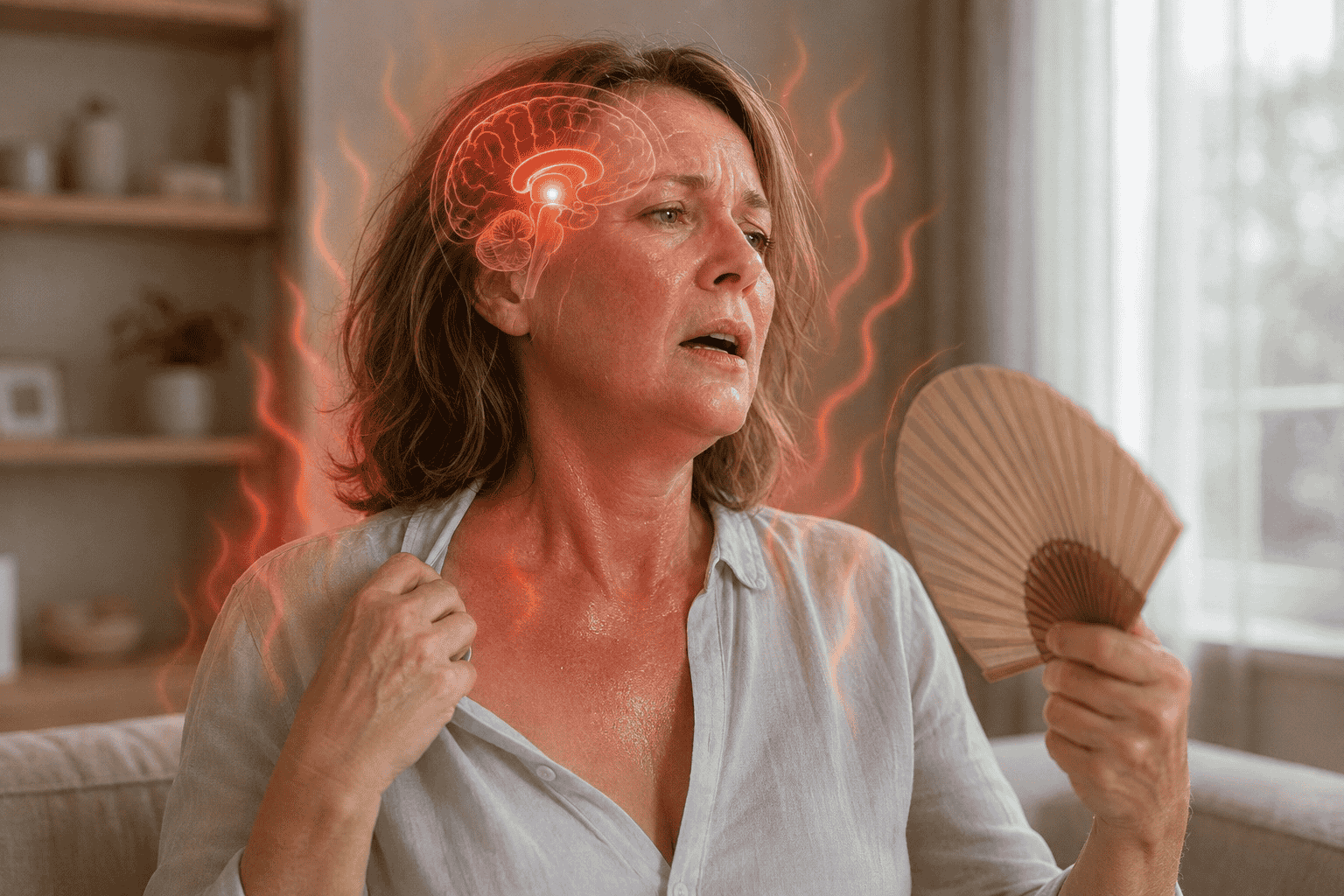
A hot flash is a thermoregulatory event driven by a narrowing of the thermoneutral zone — the range of body temperature the hypothalamus considers acceptable and doesn’t respond to. In women with stable estrogen levels, this zone is relatively wide: small fluctuations in core body temperature are tolerated without triggering a heat-dissipation response. During perimenopause, estrogen fluctuation disrupts the hypothalamus’s temperature regulation in ways that narrow this zone dramatically.
The hypothalamus contains neurons called KNDy neurons that play a central role in both reproductive hormone regulation and temperature regulation. Estrogen normally suppresses neurokinin B activity in these neurons. When estrogen declines or fluctuates, this suppression is removed, and the KNDy neurons become hyperactive. The result is a thermoregulatory system that fires more readily — triggering heat-dissipation responses in response to small temperature stimuli that would previously have been below the threshold for response.
This mechanism explains why hot flashes can be triggered by relatively minor stimuli: a warm room, a hot beverage, emotional stress, spicy food. Each of these slightly raises core body temperature, and in a narrowed thermoneutral zone, that slight rise is enough to trigger the heat-dissipation cascade.
Research has also identified that the heat dissipation response during hot flashes is disproportionate — the body overshoots in its effort to cool, which is why the sweating and vasodilation during a hot flash are often more intense than the initial temperature rise would warrant, and why many women experience a chill following a hot flash as the body overcorrects.
Why Some Women Have More Frequent or Intense Hot Flashes
Hot flash frequency and intensity vary substantially between women, and understanding what drives that variation helps explain both risk factors and management approaches.
Body weight and composition influence hot flash experience through a mechanism that seems counterintuitive: adipose tissue produces heat, and women with higher body fat may experience more intense hot flashes because their greater thermal mass generates more heat that needs to be dissipated. Research from the Study of Women’s Health Across the Nation (SWAN) found that higher BMI was associated with more frequent and severe hot flashes, even though higher body fat is also associated with higher estrone levels. The thermal mechanism appears to outweigh the estrogen-related effects.
Smoking consistently increases hot flash frequency and severity — through mechanisms including nicotine’s effects on estrogen metabolism and its direct effects on the thermoregulatory system. Former smokers retain elevated risk compared to women who never smoked.
Stress and anxiety amplify hot flash frequency through their effects on the autonomic nervous system. The same pathway that activates the stress response also lowers the thermoneutral zone threshold — meaning that emotional or psychological stress directly increases the likelihood of hot flash triggering. Women with higher baseline anxiety or who are going through periods of elevated stress often notice increased hot flash frequency during those periods.
Ethnicity influences hot flash experience in ways that research is still elucidating. The SWAN study found significant ethnic differences in hot flash prevalence and characteristics, with Black women reporting the highest frequency and severity, followed by Hispanic women, then White women, with Asian women reporting the lowest frequency. These differences likely reflect a combination of genetic factors, hormonal differences, cultural differences in reporting, and socioeconomic and stress factors.
Diet and lifestyle factors including alcohol consumption, high sugar intake, and insufficient sleep have all been associated with increased hot flash frequency. Alcohol dilates blood vessels and raises core body temperature, high sugar intake destabilizes blood sugar in ways that contribute to temperature dysregulation, and sleep deprivation increases autonomic nervous system reactivity that lowers the hot flash threshold.
Identifying Your Personal Triggers

Hot flashes have a common mechanism but highly individual triggers. While some triggers — warm environments, hot beverages, spicy food, alcohol, stress — are common across many women, the specific pattern of triggers is personal. Identifying yours is one of the most practical things you can do to reduce hot flash frequency, because avoiding or managing identified triggers can meaningfully reduce episode frequency without any medical intervention.
A hot flash diary kept for two to four weeks — noting time of day, what preceded the flash, environmental conditions, food and beverage consumed in the previous hour, stress level, and alcohol consumption — reveals patterns that memory alone misses. Common findings from hot flash diaries include:
- Caffeinated beverages triggering flashes within thirty to sixty minutes, especially in the afternoon or evening
- Alcohol consistently triggering flashes within one to two hours of consumption, often most intensely in the middle of the night
- Specific foods — spicy food most commonly, but also sugar, processed foods, and sometimes specific items that appear repeatedly without an obvious common factor
- Stress and emotional activation reliably preceding flashes, often within minutes
- Warm environments or sudden temperature changes, including transitioning from air-conditioned spaces to warm ones
- Time-of-day patterns that suggest circadian cortisol rhythms as a contributing factor
The Menopause Reset companion workbook includes a hot flash tracking section that makes this data collection systematic and easy to review over time.
What Actually Helps: The Evidence Base
Hormone Therapy
Hormone therapy — estrogen alone for women who have had a hysterectomy, or estrogen plus progestogen for women with a uterus — is the most effective treatment for hot flashes, with research consistently showing 70-90% reduction in hot flash frequency and severity in women who use it. For women with frequent, severe hot flashes that significantly affect quality of life and who are appropriate candidates, hormone therapy offers relief that no other intervention reliably matches.
The evidence on hormone therapy safety has been substantially revised since the initial 2002 Women’s Health Initiative findings were misinterpreted. For healthy women under 60 or within ten years of menopause, the current evidence supports that hormone therapy’s benefits outweigh its risks for most women with significant symptoms. Chapter 20 of the Menopause Reset covers the complete evidence, risk stratification, and available formulations.
Fezolinetant — The Newest Non-Hormonal Option
In 2023, fezolinetant (Veozah) received FDA approval specifically for moderate-to-severe vasomotor symptoms in menopause — the first non-hormonal medication designed specifically for this purpose. It works by blocking neurokinin B activity in KNDy neurons — directly targeting the mechanism described earlier in this article — and has shown 60-70% reduction in hot flash frequency in clinical trials. For women who cannot or prefer not to use hormone therapy, fezolinetant represents a meaningful advance over previous non-hormonal options.
Other Non-Hormonal Prescription Options
For women who cannot or prefer not to use hormone therapy, several non-hormonal prescription options have meaningful evidence for hot flash reduction. Low-dose paroxetine (Brisdelle) is FDA-approved for hot flash treatment and shows approximately 60% reduction in hot flash frequency. Other SSRIs and SNRIs including venlafaxine, escitalopram, and desvenlafaxine have similar evidence levels. Gabapentin and pregabalin have evidence particularly for nighttime hot flashes.
Cognitive Behavioral Therapy for Hot Flashes
CBT adapted specifically for hot flash management has a meaningful evidence base — not for reducing the physiological frequency of hot flashes, but for reducing their perceived severity and impact on quality of life. Women who complete CBT for hot flashes consistently report that while the frequency doesn’t change dramatically, the flashes become less disruptive, less distressing, and less defining of their daily experience.
Paced Respiration
Slowing the breathing rate to 6-8 breaths per minute — considerably slower than the typical resting rate of 12-16 — activates the parasympathetic nervous system and has been shown in clinical studies to reduce hot flash severity when practiced at the onset of a flash and as a regular daily practice. The mechanism involves reducing the autonomic nervous system reactivity that amplifies the thermoregulatory response. This is accessible, free, and requires no equipment. Even five minutes of paced breathing practice twice daily produces measurable reductions in hot flash distress over several weeks.
Lifestyle Factors
Regular aerobic exercise has shown mixed results in reducing hot flash frequency — some studies find benefit, others don’t. However, exercise consistently improves hot flash-related quality of life even when it doesn’t reduce frequency, and its benefits for mood, sleep, cognitive function, and long-term health during this transition make it worth prioritizing regardless of its effect on hot flash frequency specifically.
Common Questions About Hot Flashes
How long will hot flashes last?
Longer than most women expect. Research from the Study of Women’s Health Across the Nation found a median duration of 7.4 years for hot flashes, with many women experiencing them for more than a decade. Hot flashes that begin during perimenopause rather than at menopause tend to have longer total duration. There’s no reliable way to predict individual duration, which makes management rather than waiting a more practical approach.
Are night sweats different from hot flashes?
Night sweats are hot flashes that occur during sleep — the same mechanism, the same physiological event, occurring at night when the body temperature is naturally lower and the thermoneutral zone is narrowed by both the perimenopausal changes and the natural circadian temperature rhythm. The sleep disruption they cause is one of the most significant indirect health impacts of hot flashes, through the cognitive, metabolic, mood, and cardiovascular consequences of chronically fragmented sleep.
Can diet really reduce hot flashes?
The evidence for dietary interventions on hot flash frequency is modest but real for specific approaches. The most consistent evidence supports reducing or eliminating alcohol, which directly lowers the hot flash threshold through vasodilation; reducing caffeine, which is a trigger for many women; increasing dietary phytoestrogens through soy, flaxseed, and legumes, which have shown modest reductions in hot flash frequency in some studies; and maintaining stable blood sugar through protein-forward eating, which reduces one of the common hot flash triggers. No single dietary change produces the dramatic reduction that hormone therapy achieves, but the combination of trigger reduction and general dietary support can produce meaningful improvement.
Do hot flashes cause any long-term health effects?
Emerging research suggests that frequent, severe hot flashes may be associated with increased cardiovascular risk and bone loss, independent of the hormonal changes that cause them. The cardiovascular association is particularly being studied — the vasomotor instability of hot flashes may reflect underlying changes in vascular function that have long-term implications. This is one of the reasons that managing hot flashes effectively matters for reasons beyond immediate comfort, and why the conversation with your doctor about management options is worth having even if you’re coping with the symptoms.
Hot Flashes and Cardiovascular Health
Emerging research is establishing a more significant connection between hot flashes and cardiovascular health than was previously recognized. Frequent and severe hot flashes appear to be associated with increased arterial stiffness, endothelial dysfunction, and cardiovascular risk markers independent of the underlying hormonal changes that cause them.
A 2020 study published in Menopause found that women with more frequent hot flashes had greater increases in carotid artery intima-media thickness — a marker of subclinical atherosclerosis — over six years than women with fewer hot flashes. The hot flashes themselves may reflect or contribute to vascular instability with long-term cardiovascular implications.
This finding is one of the reasons that managing hot flashes effectively matters beyond immediate comfort. It adds a cardiovascular dimension to the hot flash conversation that makes treatment decisions more than just quality-of-life choices. For women with cardiovascular risk factors alongside significant hot flashes, the case for effective hot flash management — through whatever approach is appropriate for their individual situation — is strengthened by this emerging evidence.
Hot Flashes in Breast Cancer Survivors
Breast cancer survivors experience hot flashes at significantly higher rates than the general perimenopausal population, driven both by the earlier menopause that cancer treatment often induces and by the anti-estrogen therapies (tamoxifen, aromatase inhibitors) that many survivors take. For this population, hormone therapy is generally contraindicated for estrogen-sensitive cancers, which significantly limits management options.
Non-hormonal options have particular relevance for breast cancer survivors. Fezolinetant (Veozah), which works through a non-estrogenic mechanism, is being studied specifically in this population. Venlafaxine and gabapentin have the strongest evidence among non-hormonal prescription options. Mind-body approaches including CBT and paced respiration have shown particular effectiveness in this population, likely because breast cancer survivors have strong motivation to develop non-pharmacological management strategies.
Acupuncture has shown more consistent evidence for hot flash management in breast cancer survivors than in the general menopause population, with several randomized controlled trials finding meaningful reductions in hot flash frequency and severity. For survivors navigating hot flashes without access to hormonal management, acupuncture from a trained practitioner is a reasonable option to discuss with their oncologist.
Hot flashes are genuinely disruptive. They are also genuinely manageable — not eliminated by lifestyle alone, in most cases, but significantly reduced in frequency, intensity, and functional impact through the combination of trigger management, evidence-based lifestyle adjustments, and when appropriate, medical intervention. No woman should feel she has to simply endure them because they’re “normal.”
Normal doesn’t mean inevitable or unmanageable. And the Menopause Reset was written specifically because what’s normal during this transition deserves far better than the “just dress in layers and carry a fan” response that most women have historically received from both culture and medicine.