


Bloating that arrives without obvious cause. A digestive system that seems to have developed opinions it didn’t previously have. Constipation or looser stools where things were previously predictable. These digestive changes during perimenopause often get attributed to diet, stress, aging in a general sense — anything except the hormonal transition that’s also driving the hot flashes and the sleep disruption. But the gut is more connected to this transition than most women realize, and understanding why changes everything about how to address it.
Chapter 13 of the Fit Firm & Fabulous Menopause Reset is dedicated to gut health and inflammation during this transition — not as a separate wellness topic, but as a genuinely connected piece of the same hormonal story running through every other chapter. This article covers the essential connections and why supporting gut health during this transition matters for reasons that go considerably beyond digestive comfort.
How Hormones Affect the Gut Directly
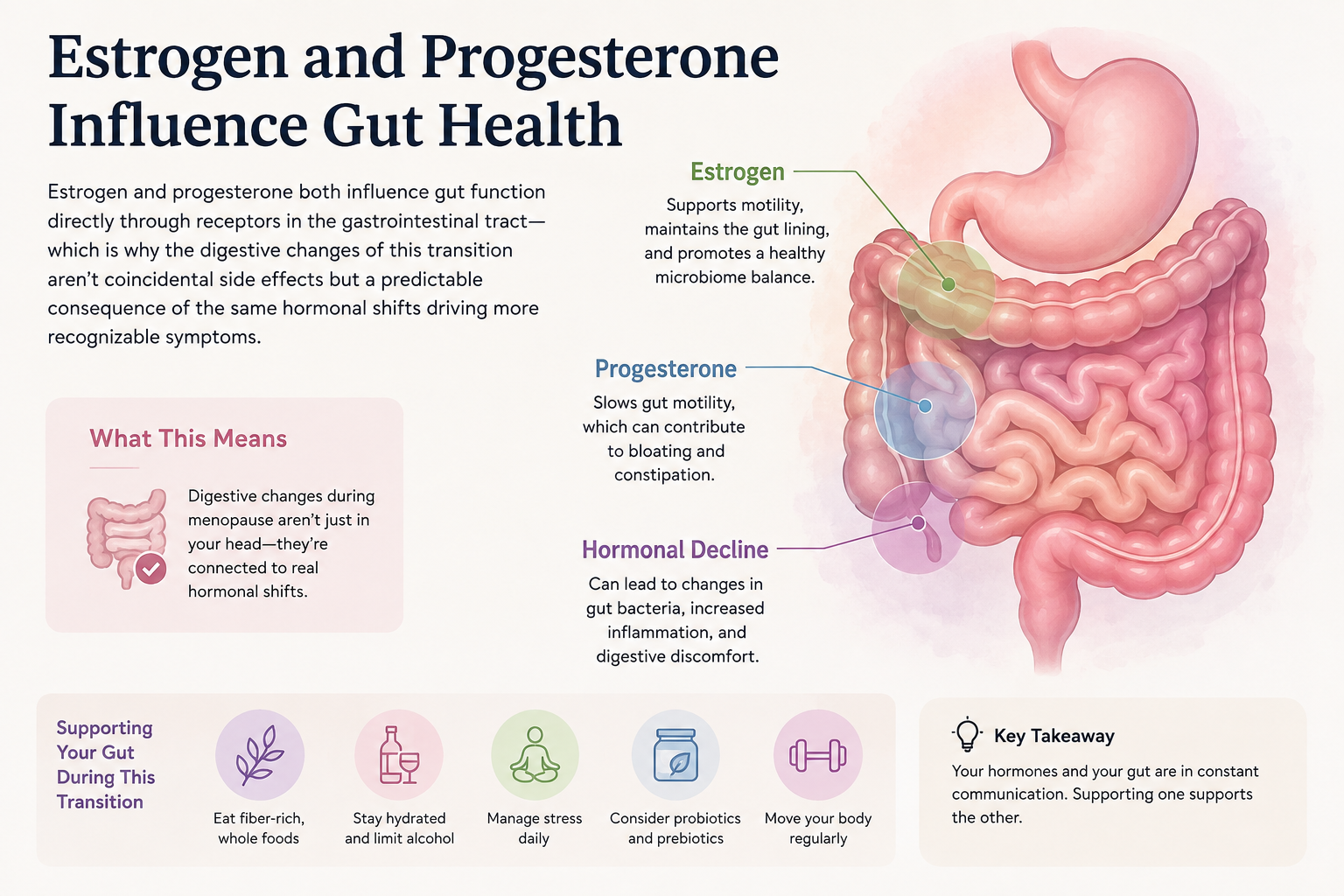
Estrogen and progesterone both influence gut function directly through receptors in the gastrointestinal tract — which is why the digestive changes of this transition aren’t coincidental side effects but a predictable consequence of the same hormonal shifts driving more recognizable symptoms.
Estrogen influences the speed at which food moves through the digestive tract. As estrogen fluctuates during perimenopause, this motility becomes less consistent — producing the alternating constipation and looser stools that many women notice without understanding why. Progesterone, which has a relaxing effect on smooth muscle throughout the body, slows gut motility when levels are high and speeds it up as levels decline, contributing to the same irregular pattern.
The result is a digestive system that is genuinely behaving differently than it did during the reproductive years — not because of changes in diet or lifestyle, but because the hormonal environment governing its function has changed. This is both validating and practically useful: if the cause is hormonal, the approaches that address it need to work with the changed hormonal environment rather than simply adjusting diet as though nothing else has changed.
The Microbiome Shift
Research has identified meaningful changes in the gut microbiome — the community of bacteria and other microorganisms that inhabit the digestive tract — during the menopause transition. The specific bacterial populations that characterize a healthy, diverse gut in the reproductive years appear to shift around this transition in ways that affect digestion, inflammation, immune function, and potentially the metabolism of hormones themselves.
This last point is particularly interesting and deserves specific mention. A subset of gut bacteria collectively called the estrobolome produces an enzyme that influences how processed estrogen is handled after the liver packages it for elimination. A more diverse, balanced gut microbiome appears to handle this process in a more regulated way — while a less diverse microbiome may allow more estrogen reabsorption than is optimal. This is an emerging area of research rather than a fully settled finding, but it adds one more dimension to why gut health and hormonal health are genuinely connected rather than parallel concerns.
The Inflammation Connection
Low-grade chronic inflammation is one of the less-discussed consequences of the hormonal changes during this transition — and one of the more consequential ones, because inflammation is a contributing mechanism in cardiovascular disease, metabolic dysfunction, and several other health concerns that become more prominent in the post-menopausal years.
Estrogen has anti-inflammatory properties throughout the body. As it declines, this anti-inflammatory effect diminishes, and a modest upward shift in systemic inflammatory markers is measurable in many women during and after this transition. The gut is directly connected to this inflammatory picture — increased intestinal permeability, sometimes called leaky gut, allows bacterial products to enter the bloodstream in ways that can amplify systemic inflammation. This is part of why the gut-health-inflammation connection matters beyond digestive symptoms alone.
The dietary approach described in the Menopause Reset’s nutrition chapters — rich in diverse plant fiber, anti-inflammatory fats, fermented foods, and quality protein, and lower in processed foods and refined carbohydrates — addresses the inflammatory picture through the gut as well as through direct nutritional mechanisms. This is why Chapter 13 of the Menopause Reset describes gut health not as a side topic from the rest of the guide but as a connected thread running through it.
The Gut-Sleep Connection
It’s worth naming a connection that most people don’t expect: emerging research has identified a genuine relationship between gut microbiome composition and sleep quality. Certain gut bacteria appear to play a role in the production and regulation of serotonin — the neurotransmitter most associated with mood but also a precursor to melatonin, which governs the sleep-wake cycle.
This connection is still being actively researched rather than fully established, and it’s offered as a genuinely interesting piece of the picture rather than a clinical directive. But it adds one more dimension to why supporting gut health through the strategies this chapter describes may have benefits that extend beyond the gut itself — potentially contributing, modestly and indirectly, to the sleep and mood improvements this guide has emphasized throughout.
What Supports Gut Health During This Transition

Diverse plant fiber is the highest-leverage dietary factor for gut microbiome health, and the emphasis on diverse plant foods throughout the Menopause Reset’s nutrition chapters serves this purpose alongside blood sugar stability and cardiovascular protection. The key word is diverse — eating a wide variety of different vegetables, fruits, legumes, and whole grains, rather than high amounts of the same few foods repeatedly, appears to support greater microbial diversity than a narrower diet would even at the same fiber content.
Fermented foods — yogurt, kefir, sauerkraut, kimchi, miso, and others — introduce live beneficial bacteria directly, complementing the fiber-feeding approach described above. A practical introduction strategy: start with small portions and increase gradually over several weeks, allowing the digestive system to adjust without the temporary bloating that a sudden large increase in fermented foods can produce. Consistency matters more than quantity — a small serving of fermented food several times weekly produces more sustained microbiome benefit than occasional large amounts.
Minimizing highly processed foods, particularly those high in certain emulsifiers and artificial additives, has been associated in research with preserving greater microbial diversity — though this remains a more actively evolving area than the fiber and fermented food findings. The practical framing aligns with the Menopause Reset’s general nutritional approach throughout: whole, recognizable foods as the foundation, processed foods as the exception rather than the norm.
When Digestive Symptoms Warrant Medical Attention
Most digestive changes during this transition fall within the range this article has described — a normal, if uncomfortable, consequence of the hormonal shift underway. It’s worth naming specifically when symptoms warrant medical evaluation rather than being attributed to perimenopause by default: persistent severe pain, blood in stool, unintended significant weight loss, or a dramatic and sustained change in bowel habits that doesn’t resemble the milder, intermittent changes described above all warrant a direct conversation with a doctor.
These signs can indicate conditions unrelated to hormonal fluctuation — conditions that deserve their own evaluation rather than being absorbed into a general menopause narrative. Colon cancer screening recommendations, specifically colonoscopy starting at age 45 for average-risk individuals, align with the age range of this transition and are worth ensuring are current alongside any conversation about digestive changes.
Histamine Sensitivity: A Less-Known Pattern
It’s worth a brief mention of a pattern some women notice during this transition: a new or increased sensitivity to histamine-containing or histamine-releasing foods — fermented foods, aged cheeses, certain wines, and others — producing flushing, headache, or digestive discomfort that weren’t previously triggered by these same foods. Estrogen appears to influence the activity of an enzyme responsible for breaking down histamine, and as estrogen fluctuates during this transition, this process can become less efficient in some women.
For women who notice this specific pattern, it’s worth mentioning to a doctor and considering as a possible explanation before eliminating fermented foods wholesale — since the overall gut health benefits of fermented foods remain relevant and the histamine sensitivity may be manageable through the specific types and amounts consumed rather than complete avoidance.