


If you’ve been chasing energy, mood stability, clear skin, hormonal balance, or a metabolism that cooperates — and nothing seems to be working consistently — there is a possibility worth considering seriously:
The answer might be in your gut.
Not metaphorically. Literally. In the hundred trillion microorganisms that live in your digestive tract and influence, with remarkable directness and breadth, nearly every system in your body.
The gut is no longer understood by science as simply a digestive organ. It is recognized as the body’s second brain — a sophisticated, semi-autonomous nervous system with more neurons than the spinal cord, producing more than ninety percent of the body’s serotonin, housing approximately seventy percent of the immune system, governing the metabolism of hormones including estrogen, and communicating constantly and bidirectionally with the brain through the vagus nerve.
When the gut is healthy — when the microbial community living in your digestive tract is diverse, balanced, and well-supported — these functions happen efficiently. Hormones are processed and eliminated properly. Neurotransmitters are produced in appropriate amounts. Immune responses are calibrated. Nutrients are absorbed. Energy is generated. Inflammation is managed.
When the gut is disrupted — when the microbial balance is disturbed by antibiotics, stress, poor nutrition, environmental toxins, or any of the dozens of other factors that affect the microbiome — the effects radiate outward into every system the gut influences. And for women, whose hormonal systems are directly connected to gut function in ways that are only now being fully understood, the consequences of gut disruption are particularly wide-reaching.
This guide is about understanding that connection — and building the daily foundation that supports gut health in a way that is genuinely, measurably transformative for the whole of your wellbein
What Lives in Your Gut — and Why It Matters

Your gut microbiome is a community of bacteria, viruses, fungi, and other microorganisms — over a thousand species — that inhabit your digestive tract, primarily in the large intestine. The collective genetic material of these organisms — the microbiome — is estimated to contain one hundred times more genes than the human genome. This is not a passive ecosystem. It is an active, metabolically complex community that produces vitamins, metabolizes toxins, synthesizes neurotransmitters, trains the immune system, and communicates constantly with your brain.
The composition of your microbiome is unique to you — shaped by your birth method, your early feeding history, your lifetime of dietary choices, your medication history, your stress levels, and your environment. It is also dynamic — changing in response to what you eat, how you live, and how you support or undermine it daily.
What determines whether your gut microbiome is working for you oragainst you is primarily diversity and balance. A diverse microbiome — one with many different species representing many different functional roles — is a resilient, functional microbiome. A lowdiversity microbiome — one that has been depleted by antibiotics, a narrow diet, chronic stress, or environmental factors — is a vulnerable one, prone to the overgrowth of less beneficial species and the underrepresentation of the strains that perform the functions your body depends on.
The Signs Your Gut Health Needs Support
Gut dysfunction presents differently in different women — which is part of why it goes unrecognized for so long. The symptoms are often treated individually rather than traced to their common root.
The digestive symptoms are the obvious ones: bloating, gas, constipation, diarrhea, irregular bowel movements, abdominal discomfort, food sensitivities that seem to be multiplying, and the sense that your digestive system is unpredictable regardless of what you eat.
But the non-digestive symptoms are often more disruptive and less clearly connected to gut health in most women’s minds: chronic fatigue that isn’t explained by sleep or activity level. Skin problems — acne, eczema, rosacea, dullness — that don’t respond to topical treatments. Mood instability, anxiety, or low mood that fluctuates in ways that don’t map cleanly to life circumstances. Brain fog and difficulty concentrating. Frequent illness or slow recovery from infections. Food cravings — particularly for sugar — that feel driven rather than chosen. Weight changes that don’t respond predictably to diet and exercise. Hormonal symptoms — PMS, irregular cycles, worsening perimenopausal symptoms — that seem disproportionate to your life stage.
When several of these symptoms are present simultaneously — particularly a combination of digestive and non-digestive symptoms — gut health is a high-priority area to investigate and support.
The Gut-Hormone Connection Every Woman Needs to Know
For women specifically, the relationship between gut health and hormonal balance is one of the most important and underappreciated connections in the entire body.
Researchers have identified a specific subset of the gut microbiome called the estrobolome — the collection of gut bacteria responsible for metabolizing estrogen. These bacteria produce an enzyme called beta-glucuronidase that determines how estrogen is processed and whether it is eliminated from the body or recirculated.
When the estrobolome is healthy and diverse, estrogen metabolism is efficient — used estrogen is processed by the liver, conjugated for elimination, and excreted. When the estrobolome is disrupted — through antibiotic use, low fiber intake, chronic stress, or gut dysbiosis — beta-glucuronidase activity increases, deconjugating estrogen in the gut and allowing it to be reabsorbed into circulation rather than eliminated.
The result of this disrupted estrogen recycling is elevated circulating estrogen — estrogen dominance — with all its associated symptoms: heavier, more painful periods, PMS amplification, breast tenderness, bloating, mood instability, weight gain around the hips and thighs, and increased risk of estrogen-sensitive conditions.
This means that supporting gut health — specifically the diversity and balance of the gut microbiome — is a direct intervention in hormonal balance. Women who improve their gut health consistently report improvements in PMS symptoms, cycle regularity, perimenopausal
symptom severity, and overall hormonal stability. Not because they changed their hormonal system directly, but because they changed the gut ecosystem that metabolizes and regulates their hormones.
The Gut-Brain-Mood Connection
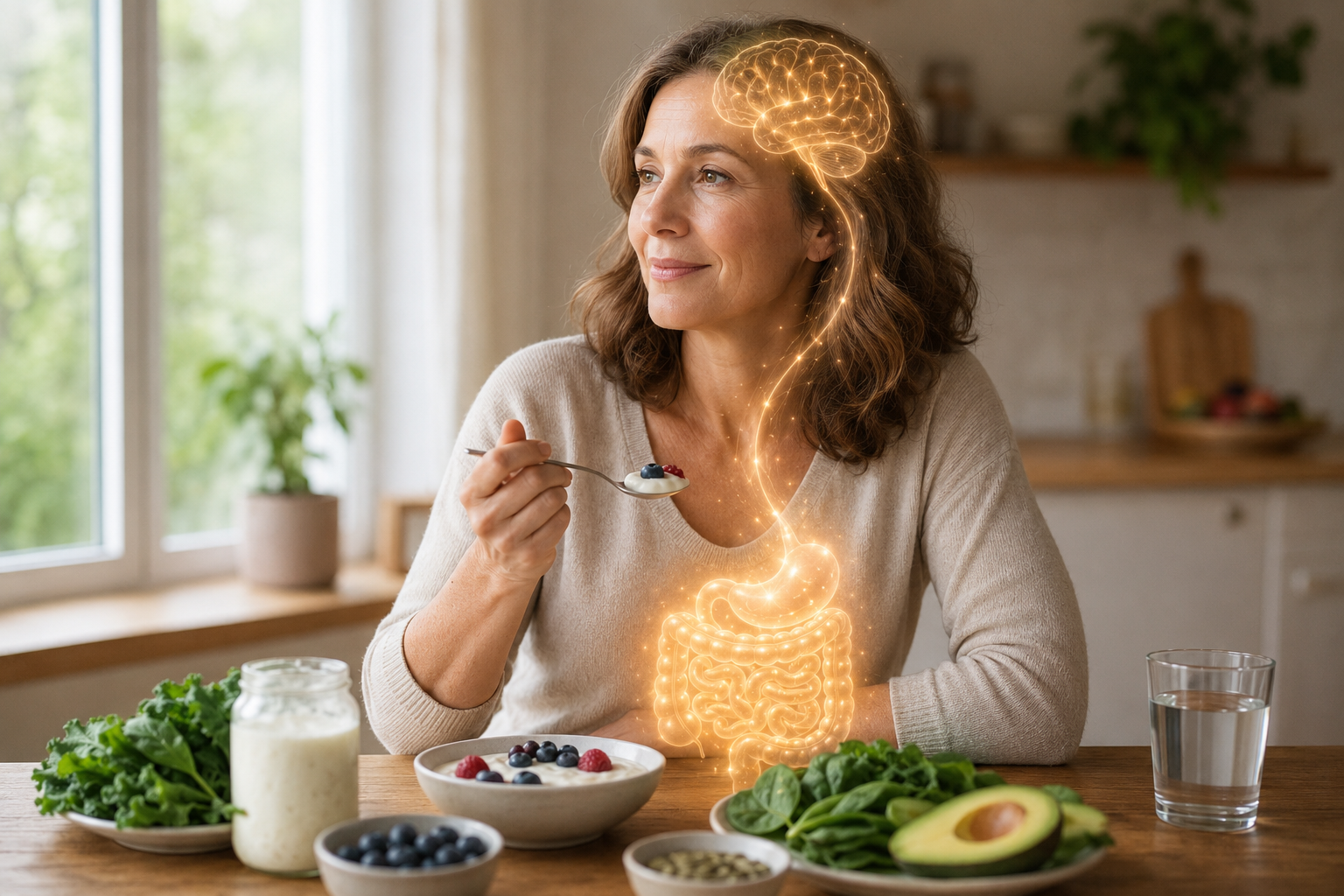
The gut-brain axis — the bidirectional communication network between the gut and the central nervous system — is one of the most significant discoveries in modern neuroscience. Through the vagus nerve, through hormonal signaling, and through the immune system, the gut and the brain are in constant dialogue. What happens in one profoundly affects the other.
The practical implications for women are significant. More than ninety percent of the body’s serotonin is produced in the gut — by intestinal cells working in close collaboration with specific gut bacteria. When the microbiome is disrupted and those bacteria are underrepresented, serotonin production is compromised. The result is not a serotonin deficiency in the brain exactly — but a gut environment that is producing less of the raw material for mood regulation than a healthy microbiome would.
This is why women with gut dysbiosis so frequently report anxiety, mood instability, and low resilience that doesn’t fully respond to therapy or lifestyle changes alone. The interventions being applied are working on the brain end of a gut-brain circuit that is disrupted at the gut end. Addressing the gut — through nutrition, probiotic support, stress management, and reduced gut inflammation — often produces mood improvements that other interventions haven’t achieved.
GABA — the primary inhibitory neurotransmitter responsible for calming the nervous system and reducing anxiety — is also synthesized in the gut by specific bacterial strains. Dopamine precursors are produced in the gut. The gut is not metaphorically your second brain. It is literally producing the neurochemicals that your brain uses to regulate your mood, your stress response, and your emotional experience.
The Gut-Immune Connection
Approximately seventy percent of the immune system lives in the gut — specifically in the gut-associated lymphoid tissue that surrounds the digestive tract and responds to everything that passes through it. The gut microbiome trains the immune system from infancy, teaching it to distinguish between pathogens that require a response and commensal bacteria that should be tolerated.
When the microbiome is disrupted, this immune education is compromised. The immune system becomes either hyperreactive — attacking things it shouldn’t, producing the inflammation underlying autoimmune conditions, allergies, and food sensitivities — or underreactive, failing to mount appropriate responses to genuine threats.
Women are significantly more likely than men to develop autoimmune conditions — and while the reasons are multifactorial, the gut microbiome’s role in immune regulation is believed to be a significant contributing factor. Supporting gut health is not just supporting digestion. It is supporting the immune system’s ability to protect you accurately and proportionately — distinguishing real threats from false alarms.
The Gut-Skin Connection
The gut-skin axis is an increasingly well-documented relationship between intestinal health and skin condition. Women who improve their gut health consistently report improvements in acne, eczema, rosacea, and general skin quality — improvements that often outpace what topical skincare alone achieves.
The mechanism is primarily inflammatory. Gut dysbiosis produces systemic inflammation through two pathways: the translocation of bacterial fragments through a compromised gut lining — a condition called intestinal permeability or leaky gut — into circulation, where they activate an immune response; and the production of inflammatory metabolites by dysbiotic bacteria that circulate systemically and affect skin barrier function, sebaceous gland activity, and inflammatory skin conditions.
Improving gut health reduces this systemic inflammation, which in turn reduces the inflammatory skin responses that produce acne, sensitivity, and premature aging. Supporting the microbiome also improves the production of short-chain fatty acids — butyrate, propionate, and acetate — that nourish the gut lining, reduce permeability, and indirectly support skin barrier function.
How to Build and Maintain a Healthy Gut Microbiome
Feed the Microbiome With Fiber Diversity
The single most important dietary intervention for gut microbiome health is dietary fiber diversity. Gut bacteria feed on the fiber in plant foods — and different bacterial species prefer different types of fiber. A diet with a wide variety of plant foods feeds a wide variety of bacterial species, supporting the diversity that defines a healthy microbiome.
The target that gut health researchers consistently point to is thirty different plant foods per week — a number that sounds overwhelming until you count the individual plants in a single salad or stir-fry and realize it’s more achievable than it appears. Every different vegetable, fruit, grain, legume, nut, seed, herb, and spice counts as one plant food toward the weekly total.
Prioritize prebiotic fiber specifically — the types of fiber that gut bacteria preferentially ferment and use to produce short-chain fatty acids. Top prebiotic food sources include garlic, onions, leeks, asparagus, Jerusalem artichokes, bananas — particularly slightly underripe ones — oats, barley, apples, flaxseeds, and legumes.
Support the Microbiome With Fermented Foods
Fermented foods contain live beneficial bacteria — probiotics — that contribute directly to the gut microbiome and support its diversity. Regular consumption of fermented foods is one of the most consistently supported dietary interventions for microbiome health in current research.
High-impact fermented foods include plain Greek yogurt with live cultures, kefir, kimchi, sauerkraut, miso, tempeh, and kombucha. Not all commercially available versions of these foods contain significant live cultures — heat processing kills the bacteria — so look for products labeled as containing live or active cultures and stored in the refrigerator rather than shelf stable.
Probiotic Supplementation — Filling the Gaps Consistently
While fermented foods are valuable, the reality of most women’s daily eating patterns is that consistent, adequate probiotic intake through food alone is difficult to achieve. This is where quality probiotic supplementation provides consistent, reliable support that food cannot always deliver.
The Fit Firm and Fabulous Women’s Probiotic 60B — part of the Morning Wellness Foundation — provides 60 billion CFUs across 12 diverse strains specifically selected for women’s microbiome needs. The strain diversity matters enormously — different strains colonize different areas of the gut, perform different metabolic functions, and support different aspects of health. A single-strain probiotic addresses a fraction of what a multi-strain formula with this diversity can achieve.
The 60 billion CFU count is clinically relevant — high enough to meaningfully influence the microbiome rather than simply passing through. Combined with delayed-release capsule technology that protects the bacteria through the acidic stomach environment, the Women’s Probiotic 60B provides the kind of consistent, comprehensive probiotic support that actually shifts the microbiome rather than supplementing it superficially.
Taken with breakfast as part of the FFF Morning Wellness Foundation, the Women’s Probiotic 60B establishes the daily probiotic baseline that diet alone is unlikely to consistently provide — making gut health support automatic rather than aspirational.
Support Digestion and Nutrient Absorption
A healthy gut microbiome is necessary but not sufficient for optimal gut function. Digestive efficiency — the ability to break down food and absorb its nutrients completely — requires adequate digestive enzyme production, sufficient stomach acid, healthy bile flow, and a gut lining that is intact and functional rather than compromised.
Many women, particularly those with a history of gut disruption, chronic stress, or processed food diets, experience compromised digestive efficiency even after improving their microbiome. Symptoms include persistent bloating even after eating whole, clean foods, undigested food in stools, nutrient deficiencies despite eating nutritiously, and discomfort after meals that healthy foods shouldn’t produce.
DigestaMax Plus — part of the FFF Midday Metabolic Support — addresses digestive efficiency directly by supporting the enzymatic and digestive processes that maximize nutrient absorption and minimize the digestive discomfort that gut dysfunction produces. Taken with lunch or an afternoon meal, DigestaMax Plus helps ensure that the nutritious food you’re eating is being broken down and absorbed efficiently — not simply passing through a digestive system that lacks the functional capacity to extract its full value.
Manage Blood Sugar for Gut Health
The connection between blood sugar stability and gut health is bidirectional and significant. High sugar and refined carbohydrate diets feed less beneficial bacterial species — particularly Candida and other opportunistic organisms — while starving the fiber-fermenting bacteria that produce the short-chain fatty acids that nourish the gut lining and regulate the immune response.
Conversely, gut dysbiosis contributes to blood sugar instability through its effects on insulin sensitivity and appetite hormone regulation — creating a reinforcing cycle where blood sugar disruption worsens gut health and gut health disruption worsens blood sugar regulation.
The Glucose Shield in the FFF Midday Metabolic Support supports healthy blood sugar balance through the afternoon hours — directly supporting the gut health environment by reducing the glucose spikes that feed dysbiotic bacterial overgrowth and compromise the microbiome diversity that healthy gut function requires.
Reduce Gut Inflammation Through Lifestyle
Gut inflammation — the chronic, low-grade inflammatory state that gut dysbiosis and intestinal permeability produce — is not only a dietary problem. It is a lifestyle problem, and addressing it requires attending to the lifestyle factors that drive inflammation alongside the nutritional ones.
Chronic stress is one of the most significant drivers of gut inflammation and microbiome disruption. The stress response directly alters gut motility, compromises the gut lining’s integrity, shifts the microbial balance toward less beneficial species, and reduces the production of protective mucus that keeps the gut lining healthy. Women under chronic stress consistently show more gut permeability, lower microbiome diversity, and worse digestive symptoms than women with lower stress loads — even when their diets are similar
Ashwagandha Balance — part of the FFF Evening Restoration — supports the stress response management that gut health requires by reducing cortisol levels and improving the body’s resilience to the physiological effects of chronic stress. By reducing the cortisol burden on the gut-brain axis during the evening hours, Ashwagandha Balance contributes to the overnight gut restoration that proper microbiome maintenance requires.
Sleep deprivation also disrupts the gut microbiome directly — studies show measurable changes in microbiome composition after just two nights of insufficient sleep, with reductions in beneficial species and increases in inflammatory strains. The Evening Restoration bundle’s support for deep, restorative sleep is therefore not simply a sleep intervention — it is a gut health intervention, supporting the overnight microbial balance and gut lining repair that adequate sleep enables.
What to Avoid for Gut Health
Understanding what harms the gut microbiome is as important as understanding what supports it — because many common habits and exposures are actively working against the microbiome health you’re trying to build.
Unnecessary antibiotic use is the most acute microbiome disruptor. Antibiotics are sometimes necessary and life-saving — but their effect on the gut microbiome is significant and not always fully reversed without deliberate restoration. When antibiotics are medically necessary, probiotic supplementation during and after the course — with the probiotic taken at least two hours apart from the antibiotic dose — supports faster and more complete microbiome recovery
Artificial sweeteners — particularly saccharin, sucralose, and aspartame — have been shown in multiple studies to alter gut microbiome composition in ways that paradoxically impair the glucose metabolism they’re intended to support. Choosing whole food sweeteners in modest amounts — honey, maple syrup, dates — when sweetness is genuinely desired is generally better for the microbiome than artificial alternatives.
Chronic non-steroidal anti-inflammatory drug use — regular ibuprofen and aspirin — damages the gut lining directly, increasing intestinal permeability and contributing to the leaky gut that drives systemic inflammation.
Ultra-processed foods — defined by their high content of industrial additives, emulsifiers, artificial colors, and preservatives alongside low fiber and nutrient density — are among the most consistent drivers of microbiome disruption in population research. Emulsifiers in particular appear to directly disturb the mucus layer that protects the gut lining, increasing permeability and the inflammatory cascade that follows.
Chronic alcohol consumption disrupts the gut microbiome, increases intestinal permeability, promotes the overgrowth of harmful bacterial species, and impairs the liver’s ability to process the bacterial fragments that permeate through a compromised gut lining.
The Complete Daily Gut Health Foundation
Building genuine, lasting gut health requires a consistent daily practice across three domains — nutrition, supplementation, and lifestyle. The Fit Firm and Fabulous Daily Essentials three-tier system was designed with this comprehensive approach in mind.
The Morning Wellness Foundation — Essential Multi for Women and Women’s Probiotic 60B — establishes the nutritional and probiotic foundation that gut health requires from the first hours of the day. The Essential Multi provides the zinc, B vitamins, and vitamin D that gut lining integrity and immune function in the gut depend on. The Women’s Probiotic 60B provides the consistent daily probiotic support that maintains microbiome diversity and the beneficial bacterial populations that every downstream function of gut health depends on.
The Midday Metabolic Support — DigestaMax Plus, Glucose Shield, and Crave Balance — maintains digestive efficiency and blood sugar stability through the peak demand hours of the day. DigestaMax Plus supports the enzymatic processes that ensure food is properly broken down and nutrients fully absorbed. Glucose Shield supports the blood sugar environment that protects the microbiome from the dysbiotic effects of glucose spikes. Crave Balance addresses the appetite dysregulation that gut microbiome imbalance directly contributes to — because the bacteria in your gut influence what you crave, and a dysbiotic microbiome consistently drives cravings for the sugar and refined carbohydrates that worsen its own condition.
The Evening Restoration — Collagen Ageless Essence, Ashwagandha Balance, and Maca Pure — supports the stress management, hormonal balance, and restorative sleep that gut health maintenance requires overnight. Ashwagandha Balance’s cortisolreducing effects protect the gut from the direct disruption that chronic stress produces. The deep, restorative sleep that the Evening Restoration bundle supports allows the gut lining to repair, the microbiome to rebalance, and the immune system housed in the gut to perform its maintenance functions without the cortisol interference that inadequate sleep produces.
Your Gut Is Telling You Something
The symptoms that gut dysfunction produces — the bloating, the fatigue, the mood instability, the skin that won’t clear, the hormones that won’t balance, the immune system that keeps failing — are not random. They are a coherent message from a system that is asking for what it needs.
Most women have been treating those symptoms individually — the skin with topicals, the mood with therapy, the fatigue with caffeine, the hormones with the pill — without ever addressing the gut environment that is contributing to all of them simultaneously.
When you address the gut — through dietary diversity, consistent probiotic support, reduced inflammation, managed stress, and protected sleep — the changes are not subtle. Women who commit to genuine gut health restoration consistently describe it as one of the most significant health improvements they’ve made — not because they fixed one thing, but because they improved the foundation that everything else is built on.
Your gut is telling you something. It has been for a while. It’s worth listening.