
The Truth Nobody Tells You About Eating Healthy When You’re Busy
Here’s the scene: it’s 6:47 p.m. You just got home. There’s a gym bag you haven’t unpacked since Tuesday sitting by the door, someone is yelling about homework, and your phone has seventeen unread messages — three of which are from your boss. Dinner. You still have to figure out dinner.
In this moment, the advice “just meal prep on Sundays and you’ll be fine” sounds like it was written by someone who has never actually lived your life.
And yet — you want to eat well. You want the energy to show up fully for your work, your family, your workouts, your self. You know that what you eat is directly connected to how you feel, how you sleep, how you think, how you handle stress. But knowing that and doing something about it when your schedule is relentless are two very different things.
This guide is not about perfection. It is not a meal plan you’ll follow for eleven days and abandon. It’s a collection of honest, tested strategies for eating in a way that actually nourishes you — at home, at restaurants, on the road, on the days when everything falls apart. It’s about being a strategic eater rather than a perfect one.
That distinction will change everything.
The Mindset Shift That Makes Everything Else Possible
Before we talk about food, we need to talk about the story you’re telling yourself about food.
Most busy women carry one of two narratives: “I’m so good today” or “I completely fell off the wagon.” Both are traps. The first sets up an impossible standard; the second invites a shame spiral that ends in eating an entire sleeve of crackers over the sink at 10 p.m.
Healthy eating, when you have a full life, is not a test you pass or fail each day. It’s a practice — more like brushing your teeth than running a marathon. You don’t “earn” a streak and you don’t “ruin” it. You simply make the next choice.
This reframe matters practically, not just emotionally. When you stop labeling food days as good or bad, you stop the all-or-nothing thinking that leads to eating a drive-through lunch and pizza for dinner because “the day is already shot.” One imperfect meal is just one meal. It has no power over the next one.
The second mindset shift is this: healthy eating is a form of self-respect, not self-punishment. When you approach food from a place of caring for yourself — fueling your brain, honoring your hunger, giving your body what it needs to do the extraordinary things you ask of it — the whole framework changes. You’re not white-knuckling through a salad. You’re eating in a way that makes you feel capable and clear-headed. That is a very different experience.
Finally, let go of the idea that healthy eating requires hours in the kitchen. It doesn’t. It requires a small amount of planning and a pantry that works in your favor. That’s it.
Building a Kitchen That Does Half the Work for You
 The Fridge You Deserve
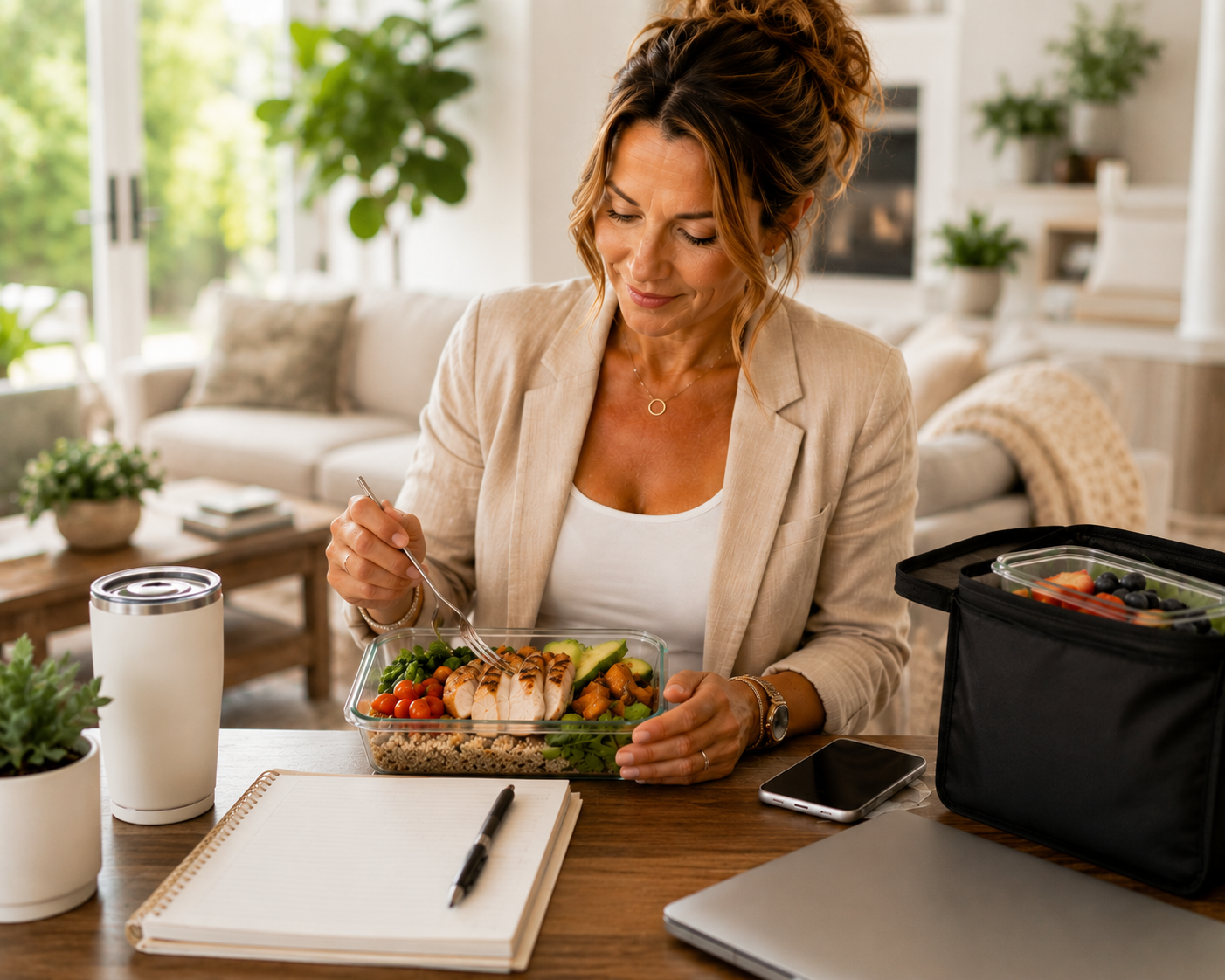
The single highest-leverage thing you can do for your eating habits is control what’s in your home. Not in a restrictive way — in a supportive way. If your fridge contains ingredients that make it easy to throw together a healthy meal in fifteen minutes, you will do that. If it doesn’t, you’ll order pizza. Both of those are rational choices given what’s available.
A well-stocked fridge for a busy woman looks like this: washed and ready-to-eat produce that you can grab without a second thought — pre-washed spinach, cherry tomatoes, baby carrots, sliced bell peppers. Cooked grains in a container (more on that in a moment). A rotisserie chicken you picked up at the grocery store. Hard-boiled eggs. Greek yogurt. Hummus. Block cheese or pre-sliced cheese. A few sauces and dressings you actually like, because food that tastes good is food you’ll actually eat.
The word to focus on here is accessible. Produce that’s hiding in a drawer, whole and unwashed, will rot. Produce that’s eye-level, washed, and ready will disappear by Thursday. When you get home from the grocery store, spend twenty minutes — not more — washing, chopping, and containerizing the items that will otherwise sit untouched. It’s not glamorous. It is extremely effective.
The Power of Anchor Ingredients
Forget weekly meal plans with five different dinners fully mapped out. That level of planning collapses the moment Tuesday’s schedule changes. Instead, think in terms of anchor ingredients — a small number of versatile staples you cook once and use across multiple meals.
A batch of roasted vegetables (whatever you have: zucchini, sweet potato, broccoli, cauliflower — all tossed in olive oil at 400°F for 25 minutes) can go into eggs in the morning, a grain bowl at lunch, or alongside protein at dinner. A pot of quinoa or brown rice cooked on Sunday night shows up in three different forms throughout the week. A pound of ground turkey or beef browned with garlic and onion becomes tacos, pasta sauce, or a rice bowl depending on what you add to it.
This approach reduces cooking time dramatically because you’re not starting from scratch every night. You’re assembling, not cooking. That’s a sustainable version of meal prep that doesn’t require an entire Sunday afternoon and matching glass containers.
Stocking the Pantry for Emergency Meals
Every busy woman needs an emergency meal arsenal — things she can pull from a cabinet and have on the table in under twenty minutes on the nights when everything goes sideways. Stock these and you’ll never truly be without options:
Canned beans (chickpeas, black beans, cannellini) add protein and fiber to almost anything. Canned fish — tuna, salmon, sardines — is an underrated fast protein. Whole grain pasta and jarred marinara mean dinner in fifteen minutes. Frozen edamame, frozen shrimp, and frozen vegetables are your best friends when fresh produce didn’t happen this week. Nut butters, whole grain crackers, and dark chocolate mean you can build a satisfying snack in thirty seconds.
The goal isn’t to have a gourmet kitchen. It’s to have enough options that “there’s nothing to eat” is never actually true.
Feeding Kids Without Running a Restaurant
Let’s talk about the intersection of healthy eating and children, which is where most good intentions go to die.
The trap that most parents fall into is making separate meals — a healthy dinner for themselves and a kid-approved dinner (chicken nuggets, pasta with butter) for the children. This is exhausting, expensive, and ultimately teaches kids nothing about how to eat. It also means you’re cooking twice, which nobody has time for.
The “Components” Strategy
The most effective approach is cooking in components rather than a single dish that everyone must agree on. Imagine dinner is taco night: you have seasoned meat or beans, tortillas, cheese, salsa, avocado, and shredded lettuce all in bowls on the counter. Your child builds their version — maybe just meat and cheese. You build yours — everything, plus a side of greens. One cooking event. No special orders. No short-order cooking.
This works with grain bowls, pasta bars (different toppings available), baked potato bars, stir-fry nights where each person controls what goes in, and build-your-own wraps. Kids actually love the autonomy of building their own meal, and you get to eat what works for your body without a negotiation.
The Exposure Game Without the Battle
If you have picky eaters, the science is on your side as long as you’re patient. Research consistently shows that children need repeated exposure to a new food — sometimes ten to fifteen times — before they accept it. The key is low-pressure exposure: put the new food on the plate without demanding it gets eaten. No bribing, no coercing, no “you have to try three bites.” Just presence.
What this means practically: if you’re eating roasted broccoli, put a few florets on your child’s plate. Don’t say anything about it. Over weeks, the unfamiliarity fades. This won’t work overnight, but it’s the only strategy that works long-term without creating a fraught relationship with food.
In the meantime, make peace with the fact that your kids may eat differently than you for a while. That’s normal. Your job is to keep offering variety; their job is to eventually accept it.
Involving Kids in Food Preparation
Children who help prepare food are significantly more likely to eat it — this is one of the most well-supported findings in nutrition research. Even a four-year-old can wash vegetables, tear lettuce, or stir a bowl. A seven-year-old can measure ingredients. A ten-year-old can learn to make a simple meal with supervision.
This is a long game. The return on this investment is a teenager who can cook for themselves and an adult who has a healthy relationship with food. The short-term payoff is a child who is more interested in what’s on their plate because they made it.
Eating Well at Restaurants Without Overthinking It
Busy women eat out. A lot. Whether it’s a working lunch, a date night, a quick bite between activities, or Friday night takeout because everyone is done — restaurant food is a real part of your eating life and pretending otherwise is a diet-culture fantasy.
The goal at restaurants isn’t to order the “healthiest” thing on the menu. The goal is to enjoy the food, feel good when you leave, and not spend the rest of the evening feeling like you swallowed a brick. That’s achievable at almost any restaurant with a little navigation.
Before You Order
Look for meals built around protein and vegetables. Not because carbs are evil — they’re not — but because protein and fiber are what keep you full and energized after the meal, and restaurant portions of carbohydrates are often enormous. A piece of salmon with roasted vegetables and a small portion of rice is going to feel very different two hours later than a giant pasta dish.
Don’t skip the appetizer category; some of the most balanced options hide there. A shrimp cocktail, a broth-based soup, a bruschetta with vegetables, a charcuterie board with restraint — these can anchor a meal without leaving you uncomfortably stuffed.
Ask for sauces and dressings on the side. This isn’t a diva move — it’s practical. Restaurant sauces are often where most of the hidden calories and sodium live, and you can usually get the flavor you want with significantly less by dipping rather than drowning.
Cuisine-Specific Strategies
Italian: Pasta isn’t off the table, but watch the portion. Consider splitting an entrée or taking half home. Opt for tomato-based sauces over cream-based ones when possible — they’re lighter and usually just as satisfying. Grilled fish and a side salad is always a strong play.
Mexican: This is actually one of the more balanced cuisines if you navigate it well. Grilled proteins, beans, and vegetables are abundant. The culprits are chips (eat them mindfully and stop when you stop truly enjoying them, not when they’re gone), heavy sour cream, and enormous burritos. A taco plate with grilled chicken or fish, black beans, and salsa is a genuinely great meal.
Asian: Sushi is excellent — prioritize fish-forward rolls with less rice if you want a lighter meal. At Thai or Chinese restaurants, watch the sauces, which can be very high in sugar and sodium. Stir-fried vegetables with protein and steamed rice is usually a solid choice; ask for brown rice when available.
Fast Food: Yes, it exists in the world, and sometimes you’re at a highway rest stop at 2 p.m. with limited options. Almost every major chain now has something workable: a grilled chicken sandwich without the mayo, a side salad, a protein box. It’s not your best meal of the week, and that’s fine. One meal doesn’t make or break a healthy eating pattern.
The Takeout Default
When you order delivery, the same principles apply with one added layer: the ordering decision happens before you’re hungry, which is a significant advantage. When you order at 5 p.m. with a clear head, you make very different choices than when you’re ravenous at 7:30 and clicking frantically through an app.
Build a shortlist — three to five restaurants you like that have reliable, reasonably balanced options — and rotate through them. This removes decision fatigue. You know what you’re getting; you just have to choose which one.
Eating on the Go — Commutes, Travel, and the In-Between Hours
The hours between meals are often where healthy eating quietly unravels. You’re driving, you’re in back-to-back meetings, you’re at the airport, and suddenly it’s been six hours since you’ve eaten anything and the vending machine is calling your name with alarming urgency.
The Car and Commute
Keep a small stash of non-perishable snacks in your bag or car. Not a full emergency pantry — just enough to prevent the vending machine moment. Good options: a small bag of mixed nuts (filling, portable, no refrigeration needed), a protein bar you actually like, packets of nut butter, dried fruit, whole grain crackers, dark chocolate squares.
The bar is low here. You’re not trying to eat a gourmet snack. You’re trying to avoid being so hungry that you make decisions you’ll regret. A handful of almonds at 3 p.m. is not a big deal. Arriving home ravenous and eating everything that isn’t nailed down is a much bigger problem.
Airport and Travel Eating
Airports have gotten meaningfully better in the past decade. Most major airports now have at least a few options that aren’t just fried food and candy. Look for smoothie bars, sandwich spots with grain bread, salad stations, or even sit-down restaurants where you can order something substantial.
When traveling, dehydration is often misread as hunger — especially on planes. Drink water aggressively before reaching for food. This sounds small, but it genuinely shifts the way you feel and the choices you make.
Pack snacks in your carry-on for long flights. Airlines no longer feed you well, and the hunger that hits at 30,000 feet paired with the stress of travel is a recipe for eating two bags of pretzels and calling it a meal.
Grocery Shopping Without Wasting Time or Money
The grocery store is where your week is made or broken. What comes home determines what you eat.
Shop With a Framework, Not a List
A rigid grocery list that maps to specific recipes creates rigidity — if you don’t cook Tuesday’s planned meal, the ingredients sit and go bad. Instead, shop by category: one or two proteins, two or three vegetables (some fresh, some frozen), one fruit or two, a grain, dairy if you use it, pantry restocks as needed.
This framework flexes with your week. If you bought chicken and salmon and end up eating out on Tuesday, neither goes to waste — you use them across the other nights.
The Perimeter-and-One-Aisle Strategy
The perimeter of most grocery stores is where the whole food lives: produce, meat, dairy, eggs. The inner aisles are where processed food lives — but also where your beans, grains, olive oil, and canned goods live, which you need. Shop the perimeter first and fill your cart with the fundamentals. Then make one strategic pass through the inner aisles for the pantry staples.
This reduces the impulse buying that happens when you wander aisles hungry and without direction.
Grocery Delivery and Pick-Up
If you haven’t tried grocery pick-up or delivery, it may be the single highest-ROI thing you do for your eating habits this year. Shopping from home means you’re not walking past the bakery section when you’re hungry, you’re not impulse-buying, and you’re not spending ninety minutes of your Saturday in a store. You buy what you intended to buy and nothing else.
The small fee for delivery is worth it when you consider the cost of food that goes to waste, the time you reclaim, and the quality of choices you make when you’re not standing in a store at the end of a long day.
When You’re Exhausted — Permission Slips and Fallback Meals
Let’s be honest about something: there will be nights when none of this happens. When you’re too tired to even open the fridge properly. When dinner is cereal, or toast, or the leftover birthday cake your coworker brought in on Wednesday.
These nights are not failures. They are data.
If they’re happening occasionally, they’re a normal part of having a full life. If they’re happening most nights, something structural needs to change — too much on your plate, not enough support, a pantry that isn’t working for you. But the answer is a structural fix, not more willpower.
For the nights that are just hard, build a personal list of three to five five-minute meals that feel like comfort food but actually nourish you. These are your permission slips:
Eggs any way. Scrambled, fried, in a wrap, on toast — eggs are fast, protein-rich, and satisfying. A two-egg scramble with leftover vegetables and a piece of toast is a complete meal in under ten minutes.
Greek yogurt bowl. Full-fat Greek yogurt, some fruit (fresh or frozen, thawed), a handful of granola, a drizzle of honey. This is dinner when dinner isn’t happening. It’s protein-rich, and it’s absolutely fine.
Pantry pasta. Whole grain pasta + olive oil + canned white beans + garlic + whatever herbs you have + parmesan. Twenty minutes, satisfying, and genuinely delicious.
Smashed avocado situation. Good bread, avocado, an egg on top, everything bagel seasoning, hot sauce if that’s your thing. Ten minutes, maximum comfort.
The giant salad. Pre-washed greens, every vegetable in your fridge, canned chickpeas, a hard-boiled egg if you have one, and a dressing you love. This doesn’t feel like deprivation when it’s built well.
None of these require a recipe. None require energy you don’t have. They just require that the ingredients exist in your kitchen, which is why stocking your pantry and fridge the right way matters so deeply.
Building Habits That Actually Stick
You can have the best strategies in the world and still struggle if you’re trying to implement them all at once. Behavior change research is clear: people who try to overhaul everything simultaneously succeed far less often than people who make one small change, let it become automatic, and then add the next one.
Pick one thing from this guide. Just one. Maybe it’s washing and prepping produce when you get home from the store. Maybe it’s building a list of five pantry essentials you’ll always keep stocked. Maybe it’s committing to protein at every meal. Let that one thing settle into your routine — two weeks, three weeks, however long it takes to feel natural — before you add another.
This is not the slow approach. This is the approach that works.
The women who eat well consistently, who feel energized and nourished and comfortable in their bodies, are almost never the ones following a rigid plan. They’re the ones who’ve built a quiet infrastructure of small habits: the fridge that’s stocked, the snack in the bag, the restaurant shortlist, the fallback meal for hard nights. None of it is dramatic. All of it adds up.
The Bigger Picture — Why This Matters More Than You Think
There’s a reason we put off taking care of our own nutrition while we manage everything else: it feels selfish, or frivolous, or like one more thing to feel guilty about when we don’t do it perfectly.
But here’s what’s actually true: how you eat directly affects your cognitive function, your mood stability, your immune system, your energy levels, and your ability to handle stress. When you’re running on caffeine and convenience food, you’re running on fumes. The patience runs thin faster. The focus is harder to access. The exhaustion is deeper and recovers more slowly.
Eating well is not a luxury. It is infrastructure — the same as sleep, the same as movement. It is the foundation everything else is built on.
You are doing extraordinary things in your life. You’re managing a career, relationships, a household, possibly children, definitely your own inner world. You deserve fuel that matches the output you’re giving.
Not the perfect diet. Not the clean-eating influencer version. Just real food, most of the time, in a way that fits the actual life you’re living — not the idealized version of it.
That’s the whole goal. And you are more than capable of reaching it.