


It often starts quietly. A period that arrives a few days early when yours has been reliable for twenty years. Sleep that becomes lighter, less satisfying, punctuated by warmth you can’t quite explain. An irritability that arrives with a hair-trigger you don’t recognize as your own. Weight that gathers around your middle despite nothing changing in your diet or your routine.
You’re in your early forties — perhaps your late thirties — and you don’t connect any of this to hormones because nobody told you that hormonal change could start this early, this subtly, and in this many different directions simultaneously
You go to your doctor. If you’re fortunate, she orders hormone panels and explains what she sees. If you’re less fortunate — and research suggests most women fall into this category — you’re told you’re too young for menopause, offered an antidepressant for the mood changes, a sleep aid for the insomnia, and sent home without anyone connecting the dots between the scattered, confusing constellation of symptoms you’re experiencing and a single, coherent hormonal explanation.
Perimenopause. The transition that can begin seven to ten years before your last period. The hormonal shift that affects virtually every system in your body. The experience that most women navigate largely in the dark — because it remains one of the most underdiscussed, under-researched, and under-addressed aspects of women’s health.
This guide is the conversation you deserved to have years ago.
What Perimenopause Actually Is

Perimenopause is the transitional phase between the reproductive years and menopause — the point at which a woman has not had a menstrual period for twelve consecutive months. Unlike menopause, which is a single moment in time defined retrospectively, perimenopause is a process — a gradual, often erratic, multi-year hormonal transition that typically begins in the early to mid-forties but can start as early as the mid-thirties.
During perimenopause, the ovaries begin producing estrogen less consistently and in more variable amounts. The follicles — the structures in the ovaries that house eggs and produce estrogen and progesterone — become less responsive to the FSH signals from the pituitary gland that stimulate hormone production. Ovulation becomes irregular, which means progesterone — produced after ovulation — also becomes inconsistent.
The result is not a gradual, smooth decline in hormones. It is a period of significant hormonal volatility — estrogen may spike higher than it ever did during the reproductive years before dropping to its eventua postmenopausal baseline, and it may fluctuate dramatically from cycle to cycle. Progesterone declines more consistently and earlier than estrogen — creating the estrogen-dominant hormonal environment that produces many of the most characteristic early perimenopausal symptoms
This hormonal volatility — rather than simple hormonal decline — is what produces the bewildering range of perimenopausal experiences. The symptoms can seem contradictory because the hormonal shifts driving them are inconsistent and unpredictable. One month may feel almost normal. The next may feel completely derailed.
The Symptoms You May Not Have Connected to Perimenopause
The hot flashes and night sweats that popular culture associates with menopause are real — but they are far from the only symptoms of perimenopause, and they are often not the first ones to arrive. The following symptoms, occurring in a woman in her late thirties or forties, are far more likely to represent perimenopausal hormonal changes than any other cause — but are frequently treated in isolation rather than understood as part of a single hormonal picture.
Irregular periods — cycles that become shorter or longer, periods that become heavier or lighter, spotting between periods, or a general unpredictability in a cycle that was previously reliable — are often the first sign of ovarian function beginning to shift.
Sleep disruption — specifically the light, fragmented, nonrestorative sleep or early morning waking that doesn’t respond to sleep hygiene improvements — is driven by progesterone’s decline removing its natural sedative effect and by cortisol dysregulation that accompanies the hormonal transition.
Brain fog — difficulty with word retrieval, reduced ability to concentrate, a sense of cognitive slowing or memory disruption that feels alarming — is one of the symptoms women report most frequently but discuss least, partly from fear of what it might mean. It is driven directly by estrogen’s effects on cognitive function and is typically transient, improving as hormonal levels stabilize in the postmenopausal years.
Joint pain and muscle aches that arrive without injury or overuse — reflecting estrogen’s anti-inflammatory role in joint and connective tissue health.
Changes in skin and hair — skin becoming drier, thinner, less firm; hair becoming finer, more prone to loss; the collagen breakdown that accelerates significantly as estrogen declines.
Vaginal changes — dryness, discomfort, changes in sexual function — driven by estrogen’s role in maintaining vaginal tissue health.
Weight redistribution — specifically the shift from a gynoid fat distribution pattern — hips and thighs — to an android pattern, with fat accumulating around the abdomen — driven by the metabolic changes that accompany estrogen decline and the increased insulin resistance of the perimenopausal transition.
Worsening PMS — the intensification of premenstrual symptoms, particularly anxiety, mood instability, and bloating, in the years before periods become irregular — driven by the progesterone decline and estrogen volatility of early perimenopause.
Increased stress sensitivity — a reduced capacity to handle stressors that were previously manageable, driven by the loss of estrogen’s buffering effect on the stress response and the reduced GABA activity that progesterone decline produces.
The Physiology Behind the Transition
Understanding what is happening hormonally during perimenopause — not just that hormones are changing, but specifically which hormones are doing what and why — is empowering in a way that a list of symptoms alone is not.
Progesterone declines first and most significantly in the perimenopausal transition, because anovulatory cycles — cycles in which ovulation does not occur — become increasingly common. Since progesterone is produced by the corpus luteum after ovulation, cycles without ovulation produce little or no progesterone. The first hormonal imbalance of perimenopause is therefore typically a relative progesterone deficiency against a backdrop of still-normal or even elevated estrogen — the estrogen dominance that drives the early, often most disruptive perimenopausal symptoms.
Estrogen becomes erratic — spiking at times to levels higher than those seen during the reproductive years, then dropping significantly, then recovering partially. This volatility is more disruptive than simple decline because the body’s systems are responding to a moving target rather than a stable baseline. The brain, the cardiovascular system, the gut, the skin, the bones — all systems that depend on estrogen signaling — are being asked to function amid significant hormonaluncertainty.
FSH rises as the pituitary gland attempts to compensate for the ovaries’ reduced responsiveness by producing more of the folliclestimulating hormone that drives estrogen production. Elevated FSH is one of the clinical markers used to confirm perimenopausal transition, though it is not reliable in isolation because of the volatility of hormone levels during this phase.
Testosterone declines progressively from the early thirties through perimenopause — reducing libido, energy, motivation, and the muscle mass maintenance that testosterone supports. The decline is gradual enough that many women don’t attribute the changes they notice to testosterone specifically, but the cumulative effect over a decade is significant.
Cortisol sensitivity increases as estrogen declines — estrogen has a buffering effect on the stress response, and its reduction leaves women more physiologically reactive to stressors that they previously handled without significant physical response. The perimenopausal increase in anxiety is not entirely psychological — it is partly a direct consequence of reduced hormonal buffering of the stress response.
The Systems Most Affected by Perimenopausal Changes
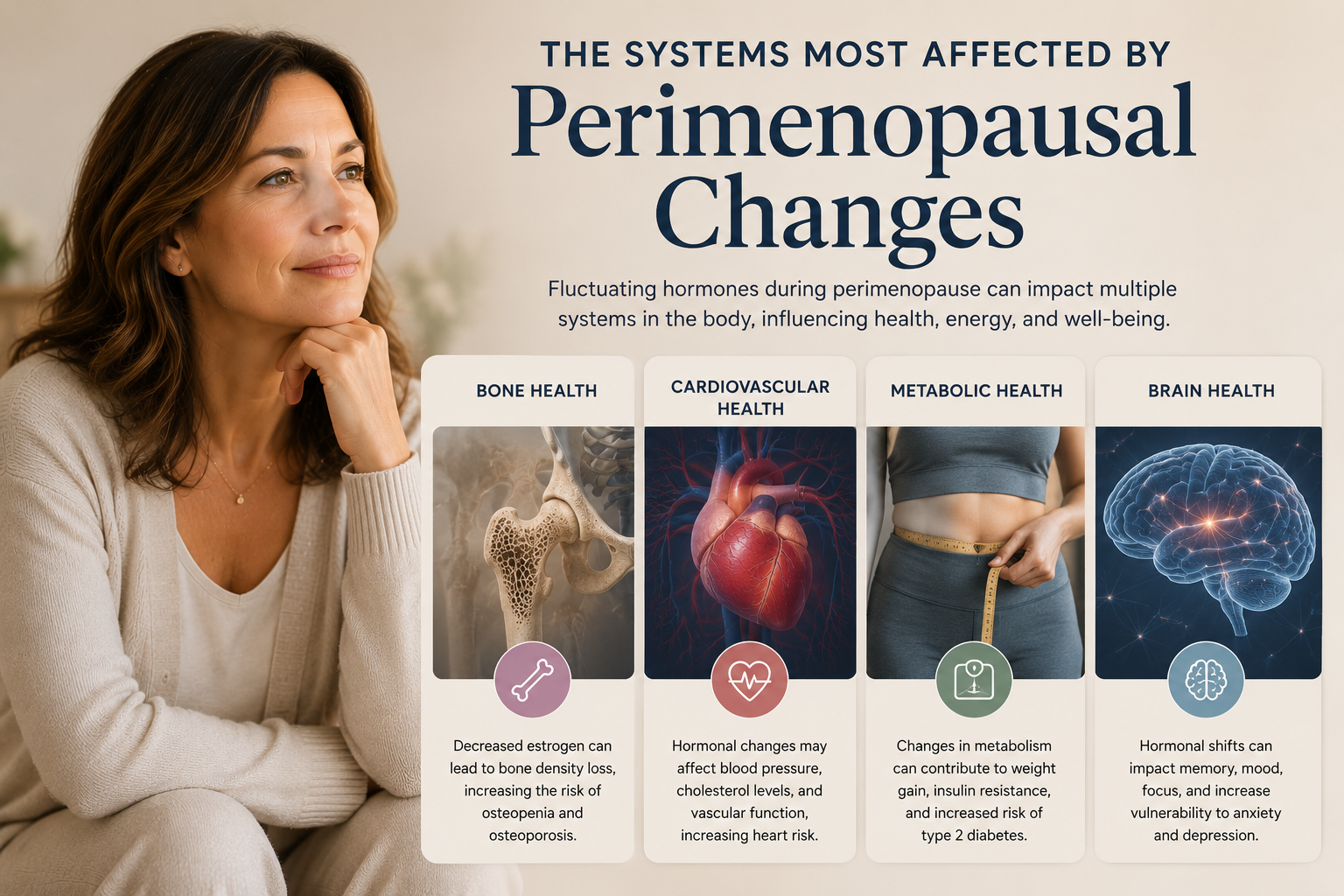
Bone Health
Estrogen is one of the primary regulators of bone density — it promotes the activity of osteoblasts, the cells that build bone, while inhibiting osteoclasts, the cells that break it down. As estrogen declines in perimenopause, bone loss accelerates — with women typically losing one to three percent of bone density per year in the years around menopause. Osteoporosis risk becomes real and requires active prevention rather than passive awareness.
The nutritional interventions most critical for bone health during perimenopause include adequate calcium — a minimum of 1,200 mg daily from food and supplements combined — vitamin D, magnesium, vitamin K2, and adequate protein, which is essential for the collagen matrix that provides bone its structural integrity.
The Essential Multi for Women in the FFF Morning Wellness Foundation provides the calcium, vitamin D, magnesium, and B vitamins that bone health during perimenopause requires as a daily baseline — addressing the nutritional foundation of bone preservation from the first hours of the day.
Cardiovascular Health
Estrogen has significant cardioprotective effects — it supports healthy cholesterol profiles by raising HDL and reducing LDL, maintains arterial flexibility, reduces inflammation in blood vessels, and supports healthy blood pressure regulation. As estrogen declines in perimenopause, cardiovascular risk increases — and women’s risk of heart disease, which is lower than men’s during the reproductive years, converges with and eventually surpasses men’s in the postmenopausal period.
The cardiovascular implications of perimenopause underscore the importance of nutritional support, physical activity, blood sugar management, and stress management during this transition — all of which directly protect cardiovascular health in the absence of estrogen’s natural protective effects.
Metabolic Health
The perimenopausal shift in fat distribution — from gynoid to android — is driven by the intersection of estrogen decline, increased cortisol sensitivity, reduced insulin sensitivity, and muscle mass loss. Visceral fat accumulation around the abdomen increases not just aesthetic concern but metabolic risk — visceral fat is metabolically active, producing inflammatory cytokines and contributing to insulin resistance in a self-reinforcing cycle
Blood sugar management becomes more critical during perimenopause than at any prior life stage. The FFF Midday Metabolic Support — DigestaMax Plus, Glucose Shield, and Crave Balance — addresses this directly by supporting the blood sugar stability and digestive efficiency that the perimenopausal metabolic environment specifically requires.
Glucose Shield supports healthy blood sugar balance through the afternoon hours — reducing the insulin spikes that contribute to visceral fat accumulation and the energy instability that blood sugar volatility produces. Crave Balance addresses the appetite dysregulation that both estrogen decline and blood sugar instability create — reducing the carbohydrate and sugar cravings that so many perimenopausal women describe as significantly more intense than at any previous life stage. DigestaMax Plus supports the digestive efficiency that nutrient absorption requires — ensuring the nutritious food choices of perimenopause are actually being absorbed rather than simply consumed.
Brain Health
The brain is profoundly affected by perimenopausal hormone changes — estrogen receptors are found throughout the brain, including in regions governing memory, executive function, mood regulation, and the sleep-wake cycle. The cognitive symptoms of perimenopause — brain fog, word-finding difficulties, reduced concentration — are real neurological phenomena driven by the withdrawal of estrogen’s cognitive-supportive effects, not imagined experiences or signs of early dementia.
The good news is that most cognitive symptoms of perimenopause are transient — they improve as the brain adapts to its new hormonal baseline in the postmenopausal years. The interventions that best support brain health through the transition include omega-3 fatty acid sufficiency, blood sugar stability, adequate sleep, regular aerobic exercise, and stress management — all of which are addressed through the complete FFF Daily Essentials system and the lifestyle framework we’ve built throughout this guide
Natural Support for Perimenopausal Wellness
Hormonal Support Through Nutrition
The nutritional demands of perimenopause are specific and significant — and meeting them requires deliberate attention rather than the same dietary approach that supported health in the reproductive years.
Protein becomes more critical in perimenopause than at any prior stage — because muscle mass maintenance, which testosterone and estrogen both support and which declines as they do, requires dietary protein to compensate for the reduced hormonal stimulus. Women in perimenopause need approximately 1.2 to 1.6 grams of protein per kilogram of body weight per day — significantly more than the 0.8 g/kg recommended for general adult populations. Distributing this protein across all three meals, with thirty grams at breakfast being the non-negotiable anchor, supports muscle preservation, blood sugar stability, and satiety in a hormonal environment where all three are increasingly challenged.
Phytoestrogens — plant compounds that weakly bind to estrogen receptors and can partially compensate for declining estrogen — have evidence for reducing hot flash frequency and severity, supporting bone density, and improving lipid profiles in perimenopausal women. The most researched sources include soy isoflavones, flaxseed lignans, and red clover. Daily ground flaxseed — two tablespoons — in a smoothie or yogurt is one of the simplest and most evidencesupported perimenopausal nutritional interventions available.
Healthy fats support the continued production of the sex hormones that the ovaries are producing in declining amounts — and support the cardiovascular health that estrogen’s decline makes increasingly important to protect actively.
Calcium-rich foods — dairy, fortified plant milks, leafy greens,sardines — alongside vitamin D sufficiency are the foundational nutritional intervention for bone health through the perimenopausal transition.
The Three-Tier Daily Support System
The Fit Firm and Fabulous Daily Essentials three-tier system provides comprehensive perimenopausal nutritional support across the full day in a way that single supplements or isolated interventions cannot match.
The Morning Wellness Foundation — Essential Multi for Women and Women’s Probiotic 60B taken with a protein-rich breakfast — addresses the broad nutritional baseline that perimenopause demands. The Essential Multi provides the calcium, vitamin D, magnesium, B vitamins, zinc, and iron that perimenopausal women’s changed bodies specifically require. The Women’s Probiotic 60B supports the gut health and estrobolome function — the gut bacteria responsible for estrogen metabolism — that are particularly important during a phase when estrogen processing efficiency directly affects symptom severity
The Midday Metabolic Support — DigestaMax Plus, Glucose Shield, and Crave Balance taken with lunch — addresses the metabolic challenges that perimenopause introduces. Blood sugar stabilization through Glucose Shield reduces the insulin resistance and visceral fat accumulation that estrogen decline promotes. Crave Balance addresses the intensified appetite dysregulation. DigestaMax Plus supports the digestive efficiency that nutrient absorption requires during a phase when nutritional demands are higher than ever.
The Evening Restoration — Collagen Ageless Essence, Ashwagandha Balance, and Maca Pure taken in the evening — is the tier most specifically targeted at perimenopausal support, and it deserves particular attention in this context
Maca Pure has the strongest evidence base of any single natural supplement for perimenopausal symptom management. Multiple clinical trials have demonstrated that maca supplementation in perimenopausal and menopausal women significantly reduces hot flash frequency and severity, improves sleep quality, reduces anxiety and depression scores, supports sexual function, and improves energy levels — without direct hormonal activity, but through its effects on the hypothalamic-pituitary axis that governs hormonal signaling. For
women navigating the volatility of early perimenopause, Maca Pure’s regulatory effects on the hormonal signaling axis provide support that addresses root causes rather than simply managing individual symptoms.
Ashwagandha Balance addresses the increased cortisol sensitivity and stress reactivity of perimenopause — supporting the HPA axis recalibration that the loss of estrogen’s stress-buffering effects makes increasingly necessary. The cortisol reduction and sleep quality improvements documented in clinical ashwagandha research are particularly valuable during a phase when both cortisol dysregulation and sleep disruption are at their most significant.
Collagen Ageless Essence directly addresses the accelerated collagen breakdown that estrogen decline produces — supporting the skin firmness, joint integrity, and tissue repair that estrogen previously sustained and that its decline progressively compromises. The glycine in collagen also supports sleep quality through its temperature-lowering and nervous system calming effects — addressing the sleep disruption of perimenopause from an additional angle.
Movement as Perimenopausal Medicine
Physical activity becomes more critical — and its specific type matters more — during perimenopause than at any previous life stage.
Resistance training is the highest-priority movement modality for perimenopausal women. It preserves the muscle mass that testosterone and estrogen decline reduces, improves insulin sensitivity, supports bone density, raises metabolic rate, reduces visceral fat accumulation, improves mood through endorphin and BDNF release, and supports the cognitive function that estrogen’s withdrawal from brain tissue compromises. Two to three sessions per week of resistance training — involving all major muscle groups, with progressive overload over time — is the evidence-based minimum for meaningful perimenopausal benefit.
Cardiovascular exercise at moderate intensity supports the cardiovascular health that estrogen previously protected, improves mood through multiple neurochemical pathways, supports healthy weight management, and reduces hot flash frequency in a significant proportion of women. Thirty minutes of moderate cardio — walking, cycling, swimming — on most days of the week provides cardiovascular protection during the transition phase.
Yoga and mind-body practices are particularly valuable during perimenopause for their cortisol-reducing, parasympathetic-activating effects — directly addressing the increased stress reactivity and sleep disruption of this phase. Restorative yoga in particular — long, supported holds that activate the parasympathetic system — is one of the most effective non-pharmacological interventions for perimenopausal anxiety and sleep disruption.
Stress Management as Non-Negotiable
The increased cortisol sensitivity of perimenopause — the biological reality that stressors produce a larger physiological response than they did during the estrogen-buffered reproductive years — means that stress management transitions from a general wellness recommendation to a specific perimenopausal health requirement.
The adaptogenic support of the Evening Restoration bundle — Ashwagandha Balance and Maca Pure — provides the daily hormonal and adrenal support that partially compensates for the lost estrogen buffering. The behavioral and lifestyle practices of stress management — breathwork, boundaries, movement, sleep protection, deliberate recovery — provide the remainder of what’s needed.
What is not effective during perimenopause is the same approach to stress that got you through the reproductive years. The physiological landscape has changed. The body’s capacity to manage chronic stress without consequences has reduced. This is the life stage that most directly and urgently demands the structural changes — reduced load, clearer limits, more deliberate recovery — that the general stress management conversation so frequently stops short of recommending.
Reframing the Perimenopause Narrative
The story most women receive about perimenopause is one of loss — of youth, of hormonal regularity, of the body that functioned in a particular way for decades. And there is genuine grief in this transition that deserves acknowledgment.
But the women who navigate perimenopause most successfully — who come out the other side with vitality, clarity, and a quality of life equal to or better than what came before — are almost universally those who encountered a different narrative alongside the grief. One that recognized the transition not only as a loss but as a clarification.
Perimenopause tends to make things very clear. What the body needs and has not been getting. What the life has been asking for and has not been provided. What the woman values most clearly when the hormonal volatility strips away the tolerance for things that don’t serve her. Many women describe perimenopause as the first time they stopped accommodating things they’d been accommodating for decades — not because they became difficult, but because the physiological cost of accommodation became impossible to ignore.
In that sense, the symptoms of perimenopause are not only problems to be managed. They are signals pointing toward a life — and a level of self-care — that is more aligned with what a woman in the second half of her life actually needs and deserves.
The foundation you build during this transition — the nutrition, the supplementation, the movement, the sleep, the stress management, the community — doesn’t just get you through perimenopause. It establishes the wellness infrastructure that the postmenopausal decades are built upon.
Build it well. Build it for the woman you are becoming. She is worth every bit of the investment.
You Deserve to Know What’s Happening in Your Own Body
The information in this guide should not be new to you. It should have been part of the conversation you had with your healthcare provider at your first appointment where you described symptoms that didn’t make sense. It should have been part of the education you received as you entered your late thirties and early forties.
The fact that most women navigate perimenopause largely in the dark — connecting their own dots, piecing together their own understanding from whatever sources they can find — is a gap in women’s healthcare that is only slowly beginning to close.
FFF exists, in part, to be part of closing it. To be the source that gives you the information you deserve about what is happening in your own body — and the tools, through the Daily Essentials system and the broader wellness resources we continue to build — to support your body through every stage of the journey.
Perimenopause is not the beginning of decline. It is the beginning of a different chapter — one that, with the right foundation and the right information, can be one of the most vital, clear-eyed, and genuinely empowered of your life.