


The shortened fuse that arrives without warning. The sadness that descends on an ordinary Tuesday afternoon for no reason that makes sense. The anxiety that is suddenly louder and more persistent than it’s ever been. The irritability that feels disproportionate and that you can see yourself having even as you’re having it — watching from some distance while a reaction that doesn’t quite belong to the situation plays out. The mood that doesn’t match anything happening in your life.
These experiences are among the most disorienting of perimenopause — partly because they’re less expected than the physical symptoms most women associate with this transition, and partly because they challenge the sense of emotional predictability and self-knowledge that most women in midlife have developed over decades. Women who have been emotionally stable, who have managed stress effectively, who have not historically been prone to depression or anxiety, find themselves experiencing mood states that feel unfamiliar and that don’t respond to the usual strategies.
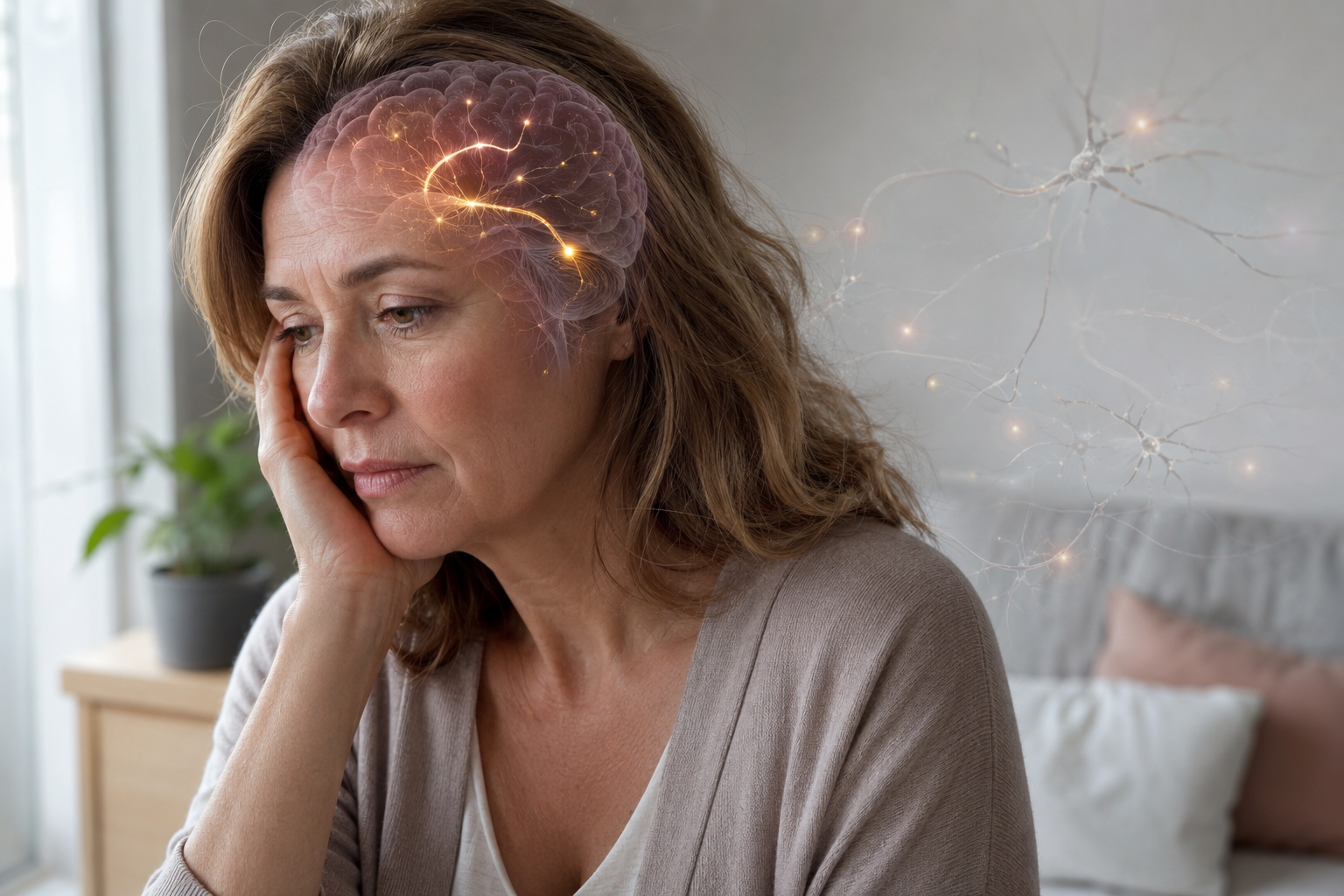
It’s not in your head. It’s in your neurobiology — specifically in the complex ways estrogen, progesterone, and their decline affect every major neurotransmitter system involved in mood regulation. This article explains the mechanisms, distinguishes between the normal mood changes of perimenopause and mood disorders that warrant clinical treatment, and covers what the evidence shows about management strategies that genuinely help.
The Neurobiological Mechanisms
The Serotonin Connection
Serotonin is the neurotransmitter most associated with mood regulation, emotional stability, and the sense of wellbeing. Estrogen influences serotonin at multiple levels: it increases the production of tryptophan hydroxylase, the enzyme that synthesizes serotonin; it promotes the expression of serotonin receptors throughout the brain; it inhibits serotonin breakdown; and it increases the sensitivity of post-synaptic neurons to serotonin’s effects. When estrogen fluctuates and declines, each of these mechanisms is disrupted — producing effectively reduced serotonin activity even without any change in diet, lifestyle, or external circumstances.
This is the mechanism behind the mood dip that many women experience in the premenstrual window during perimenopause, when estrogen drops after the mid-cycle peak, and behind the more persistent mood changes as estrogen’s overall trajectory declines. It’s also the mechanism behind why SSRIs — which increase serotonin availability — can be effective for mood symptoms during perimenopause, and why this connection is important to understand if you’re offered one.
The GABA-Progesterone Connection
Progesterone metabolizes into allopregnanolone, a neuroactive steroid that is a potent positive modulator of GABA-A receptors — the brain’s primary inhibitory system. GABA’s function is essentially to calm neural activity: to reduce the firing of neurons and produce the sense of calm, emotional regulation, and resistance to anxiety that underlies emotional stability.
When progesterone declines during perimenopause — and it begins declining earlier than estrogen — the GABA system loses a significant source of support. The result is heightened neural excitability: the nervous system fires more readily, anxiety threshold lowers, emotional reactions are larger and faster, and the calming buffer that prevented minor stressors from producing significant reactions is diminished. This is why anxiety is often one of the earliest and most prominent mood symptoms of perimenopause, and why it can appear in women who have never been particularly anxious before.
A 2020 study in Menopause: The Journal of the North American Menopause Society found that perimenopausal women had significantly lower GABA levels in specific brain regions compared to premenopausal women, and that these GABA reductions correlated with anxiety severity. The mechanism is direct and measurable.
The Dopamine and Norepinephrine Connection
Estrogen also influences dopamine and norepinephrine — neurotransmitters involved in motivation, reward, attention, and energy. Dopamine in particular is central to the experience of motivation, pleasure in anticipation, and the drive to pursue goals and activities that feel rewarding. Estrogen supports dopamine receptor sensitivity and dopamine production in the prefrontal cortex and limbic system.
When estrogen declines, dopamine’s effects can diminish — producing the flat affect, reduced motivation, anhedonia (reduced ability to feel pleasure from activities that previously felt rewarding), and low energy that some women in perimenopause describe alongside or instead of classical depression. This is distinct from the serotonin-mediated sadness or low mood: it’s more a loss of engagement and drive than a presence of sadness, and it responds to different interventions.
Distinguishing Perimenopausal Mood Changes from Clinical Depression and Anxiety

This distinction matters because it affects both how the experience is understood and what interventions are most appropriate.
Perimenopausal mood changes typically have these characteristics: they fluctuate with hormonal patterns, worsening premenstrually or during periods of hormonal turbulence; they’re more reactive than persistent, triggered by circumstances rather than present continuously; they coexist with other perimenopausal symptoms; and they don’t involve the sustained hopelessness, loss of interest in all activities, or functional impairment that characterizes clinical depression.
Clinical depression during perimenopause has these characteristics: persistent low mood lasting more than two weeks, loss of interest or pleasure in activities that previously felt enjoyable, significant changes in sleep beyond the hormonal disruption, changes in appetite, difficulty concentrating, feelings of worthlessness or guilt, and in severe cases thoughts of death or suicide. Clinical depression during perimenopause is more common than in premenopausal years, requires clinical evaluation and treatment, and should not be managed with lifestyle interventions alone.
The rate of major depressive disorder is two to four times higher in perimenopausal women than premenopausal women of similar ages, according to research from the Harvard Study of Moods and Cycles. Women with a history of premenstrual dysphoric disorder (PMDD), postpartum depression, or previous depressive episodes are at higher risk during perimenopause. Women in these higher-risk groups particularly benefit from proactive clinical support rather than waiting for symptoms to intensify.
Anxiety during perimenopause similarly exists on a spectrum from the heightened reactivity and reduced threshold described above — which is a direct consequence of progesterone decline and GABA effects — to clinical anxiety disorders that warrant specific treatment. The functional impact is the relevant guide: anxiety that interferes significantly with daily functioning, relationships, or work warrants clinical evaluation regardless of whether it’s “just perimenopause.”
The Sleep-Mood Connection
Sleep disruption and mood changes are bidirectionally connected during perimenopause in ways that create cycles that are difficult to interrupt without addressing both.
Poor sleep directly worsens mood, emotional reactivity, and anxiety through multiple mechanisms: it increases cortisol, which raises anxiety and emotional reactivity; it reduces serotonin availability; it impairs the prefrontal cortex’s ability to regulate emotional responses from the amygdala; and it depletes the energy and cognitive resources that support effective coping. Women who are not sleeping are more emotionally reactive, more anxious, more prone to low mood, and less able to access the perspective and coping skills they have in abundance when well-rested.
Mood disturbance worsens sleep: anxiety and racing thoughts prevent sleep onset and promote middle-of-the-night waking, and the hyperarousal that accompanies anxiety and mood disturbance is directly antithetical to the parasympathetic nervous system dominance that sleep requires.
Breaking this cycle typically requires addressing both simultaneously — which is one reason that the most effective approaches to perimenopausal mood disturbance are comprehensive rather than targeted at a single symptom.
What Actually Helps
Aerobic Exercise — The Evidence Is Strong
Regular aerobic exercise is consistently the most evidence-supported non-pharmacological intervention for mood during perimenopause and beyond. Exercise increases serotonin, dopamine, and BDNF; reduces cortisol; promotes the neuroplasticity that supports mood regulation; and provides acute mood elevation that lasts for several hours post-exercise. A meta-analysis published in JAMA Psychiatry found aerobic exercise as effective as antidepressants for mild to moderate depression — with the advantages of additional physical health benefits and no side effects.
The evidence supports at least 150 minutes of moderate-intensity aerobic activity weekly for mood benefits during perimenopause, which translates to approximately 30 minutes five days per week, or slightly longer sessions less frequently. Consistency matters more than intensity: the mood benefits accumulate with regular practice rather than peaking with any single session.
Hormone Therapy for Mood
For women whose mood symptoms are directly tied to hormonal fluctuation — worsening premenstrually, correlating with hot flash episodes, or coinciding with the onset of perimenopause — hormone therapy is often the most effective mood intervention because it addresses the root cause rather than just the symptoms. Research supports that estrogen therapy has antidepressant and anxiolytic effects during perimenopause, and for women who are appropriate candidates, it’s worth discussing with a knowledgeable clinician specifically in the context of mood symptoms.
Progesterone formulation matters significantly for mood. Micronized progesterone (Prometrium) has a more favorable mood profile than synthetic progestogens for most women, likely because it more directly supports the GABA mechanisms described earlier. For women on combined hormone therapy who notice mood effects from the progestogen component, this distinction is worth raising with their prescriber.
Mind-Body Practices
Mindfulness-based stress reduction (MBSR) has been studied specifically in perimenopausal women and found to significantly reduce anxiety, improve mood, and reduce the perceived severity of hot flashes. The mechanism involves both the direct neurobiological effects of regular meditation practice — which has been shown to alter amygdala reactivity and strengthen prefrontal cortex regulation of emotion — and the development of cognitive skills for relating to difficult emotions without amplifying them.
Even brief, consistent practices produce meaningful results over time. Ten to fifteen minutes of guided meditation or mindfulness practice daily is a clinically meaningful dose. Apps including Calm, Headspace, and Insight Timer make this accessible without prior experience or training.
Social Connection
Social connection is not a soft or secondary mental health intervention — it’s a primary one with a neurobiological basis. Social engagement activates the oxytocin system, supports serotonin production, reduces cortisol, and provides the sense of meaning and belonging that is among the most protective factors against depression and anxiety. The isolation that often accompanies the unspoken nature of perimenopause — navigating a significant transition without being able to name it, in a culture that doesn’t talk about it — compounds the mood challenge.
Seeking out other women who are in this transition provides both the specific benefit of shared experience and the general benefit of social connection. Women who talk about their perimenopausal experience rather than managing it privately and silently consistently report less distress from mood symptoms. This is part of what the FFF Inner Circle was built to provide — a community of women navigating this transition with information, support, and the knowledge that they are not alone in it.
Targeted Nutritional Support
Several nutritional approaches have specific relevance for mood during perimenopause. Magnesium — which supports GABA function through similar mechanisms to progesterone — has meaningful evidence for reducing anxiety and improving sleep when taken consistently. The 300-400mg daily dose of magnesium glycinate is the best-studied form for these purposes.
Ashwagandha (KSM-66 or Sensoril standardized extract) has demonstrated significant effects on cortisol reduction and anxiety in multiple clinical trials, with a 2019 study in Medicine finding 41% reduction in perceived stress scores in the ashwagandha group versus placebo. For women whose mood symptoms are primarily anxiety and stress-related rather than depression-dominant, ashwagandha represents a well-studied option with a favorable safety profile.
Omega-3 fatty acids have modest but consistent evidence for depression specifically, with EPA appearing to be the most relevant form for mood effects. Regular fatty fish consumption or quality omega-3 supplementation at 1-2g combined EPA/DHA daily is a reasonable addition for women with mood concerns.
Common Questions About Perimenopausal Mood Changes
Is it normal to feel like a different person emotionally during perimenopause?
The experience of feeling emotionally unlike yourself is one of the most common and one of the most distressing aspects of perimenopausal mood changes. The answer is that it’s extremely common — and that the specific character of the change reflects the neurobiological mechanisms described in this article rather than a fundamental change in who you are. Most women who navigate this transition with good information and support find that their emotional baseline stabilizes in post-menopause, often at a level of emotional equanimity that they value. The transition, not the destination, is the difficult part.
Should I take antidepressants for perimenopausal mood changes?
This is a clinical decision that depends on the severity of symptoms, whether they meet criteria for a diagnosable mood disorder, your personal values and preferences, and what other interventions you’ve tried. For mood symptoms that are directly tied to hormonal fluctuation and don’t meet criteria for clinical depression, hormone therapy often addresses the root cause more effectively than antidepressants. For women with clinical depression or anxiety disorders, antidepressants or anxiolytics may be the most appropriate primary treatment. A nuanced clinical conversation that considers the hormonal context is most useful.
My mood changes are affecting my relationships. What should I do?
Two things simultaneously: seek support for the mood changes themselves through the interventions described in this article, and have an explicit conversation with the people in your most important relationships about what’s happening and why. The mood changes of perimenopause are neurobiological — they have an explanation, and that explanation can be shared. Partners, family members, and close friends who understand the mechanism are far better equipped to respond helpfully than those who experience unexplained mood shifts with no context. The Menopause Reset includes a chapter specifically on relationships during this transition.
When should I seek professional help for mood changes?
Seek professional support when mood changes are persistent rather than fluctuating, when they significantly interfere with daily functioning, relationships, or work performance, when they include thoughts of self-harm or hopelessness, when lifestyle interventions after four to six weeks of consistent application haven’t produced improvement, or when the intensity of mood symptoms is causing significant distress regardless of their functional impact. Getting help early — rather than waiting until symptoms become severe — consistently produces better outcomes. A doctor familiar with perimenopause can distinguish between hormonal mood effects and clinical mood disorders and help identify the most appropriate intervention.
Grief and Loss During Perimenopause
Perimenopause coincides with a life phase that often involves genuine losses alongside the hormonal transition: parents aging or dying, children leaving home, career transitions, changes in relationships, and confrontations with one’s own mortality and aging. Distinguishing between the neurobiological mood changes of hormonal transition and the normal emotional processing of genuine life losses is important — not because one is more valid than the other, but because they respond to different kinds of support.
Grief that accompanies real losses is appropriate and healthy to process rather than suppress or medicate. The hormonal changes of perimenopause can amplify the emotional intensity of grief — making losses feel larger, more overwhelming, and harder to integrate. This amplification is worth understanding: the feeling that a loss is unbearable doesn’t mean it is unbearable. It means the neurobiological environment is making it feel that way.
Therapy that specifically addresses grief and life transition — alongside whatever support is helpful for the hormonal mood changes — can provide the space to process both the real losses and the neurobiological amplification. Women who report some of their most meaningful psychological growth during perimenopause often describe having done this dual work: processing genuine life losses while also understanding the hormonal dimension of how those losses were felt.
The Identity Dimension of Perimenopausal Mood Changes
Beyond the neurobiology and the clinical picture, perimenopausal mood changes have an identity dimension that deserves acknowledgment. Many women describe perimenopause not just as a physiological transition but as an identity transition — a renegotiation of who they are that goes alongside the hormonal changes.
The roles that have defined midlife — mother of young children, partner in a certain kind of relationship, professional in a particular phase of career, daughter in a certain family dynamic — are all in flux during the same years that the hormonal transition is occurring. The mood changes of perimenopause can make this identity renegotiation feel more acute, more destabilizing, and harder to navigate than it might otherwise be.
Women who report navigating this transition well often describe having found something they’re moving toward — not just something they’re moving away from. A clearer sense of what matters, more honest relationships, work that feels more genuinely aligned, reduced tolerance for what doesn’t serve them, and a stronger sense of self that has been clarified rather than diminished by the transition.
The Menopause Reset is built on the belief that this transition, navigated with the right information and support, doesn’t diminish women — it refines them. The mood changes are real. The neurobiological mechanisms are real. And the possibility on the other side of the transition is equally real.